<?xml version="1.0" encoding="utf-8"?>
<feed xmlns="http://www.w3.org/2005/Atom" xml:lang="nl">
  <title>Rdmr</title>
  <subtitle>Redmer Kronemeijer is data-architect bij CROW, waar hij werkt met Linked data. </subtitle>
  <link href="https://rdmr.eu/api/feed.xml" rel="self" type="application/atom+xml"/>
  <link href="https://rdmr.eu/" rel="alternate" type="text/html" hreflang="nl"/>
  <updated>2026-05-07T00:00:00Z</updated>
  <id>https://rdmr.eu/api/feed.xml</id>
  <author>
    <name>Redmer Kronemeijer</name>
  </author>
  <entry xml:lang="nl">
    <title type="html">CROWdle: raad het CROW-begrip van de dag</title>
    <link href="https://rdmr.eu/2026/speel-crowdle/" rel="alternate" type="text/html" title="CROWdle: raad het CROW-begrip van de dag"/>
    <updated>2026-05-07T00:00:00Z</updated>
    <id>https://rdmr.eu/2026/speel-crowdle/</id>
    <content type="html">&lt;p&gt;Wordle-spellen zijn intussen een gevestigd genre: elke dag één woord raden, met gekleurde feedback na elke poging.
Ook LinkedIn heeft tegenwoordig iets van zes verschillende speltjes waar je elke dag met z’n allen één potje speelt.&lt;/p&gt;
&lt;p&gt;Ik maakte een variant met de openbare &lt;a href=&quot;https://begrippen.crow.nl/&quot;&gt;CROW-thesaurus&lt;/a&gt; van m’n werkgever: de woordenlijst op het gebied van infrastructuur, openbare ruimte en mobiliteit.
M’n idee is ontstaan uit het feit dat we zo’n rijkdom aan termen hebben en daarnaast het feit dat ik soms bij de Wordle-termen dacht, &lt;em&gt;wat ís dit voor woord&lt;/em&gt;.
De thesaurus is volgens &lt;a href=&quot;https://docs.geostandaarden.nl/nl-sbb/nl-sbb/&quot;&gt;NL-SBB&lt;/a&gt; opgebouwd en ook als &lt;a href=&quot;https://datasets.crow.nl/crow/thesaurus&quot;&gt;RDF data&lt;/a&gt; beschikbaar.&lt;/p&gt;
&lt;p&gt;&lt;strong&gt;&lt;a href=&quot;https://rdmr.eu/speel-crowdle/&quot;&gt;Speel CROWdle op rdmr.eu/speel-crowdle/&lt;/a&gt;&lt;/strong&gt;&lt;/p&gt;
&lt;h2&gt;Hoe werkt het spel?&lt;/h2&gt;
&lt;p&gt;Elke dag (vanaf middernacht UTC) is er een nieuw potje beschikbaar.
Je krijgt zes pogingen op de term uit de &lt;a href=&quot;https://begrippen.crow.nl/&quot;&gt;CROW-thesaurus&lt;/a&gt; te raden.
Anders dan de Nederlandstalige &lt;a href=&quot;https://woordle.nl/&quot;&gt;Woordle&lt;/a&gt; telt de IJ als één letter; zo gaat dat ook tenslotte in kruiswoordpuzzels.&lt;/p&gt;
&lt;p&gt;Na elke poging kleurt elke letter mee:&lt;/p&gt;
&lt;ul&gt;
&lt;li&gt;🟩 &lt;strong&gt;Groen&lt;/strong&gt;: de letter staat op de juiste plek.&lt;/li&gt;
&lt;li&gt;🟨 &lt;strong&gt;Geel&lt;/strong&gt;: de letter komt in het woord voor, maar staat op een andere plek.&lt;/li&gt;
&lt;li&gt;⬜ &lt;strong&gt;Grijs&lt;/strong&gt;: de letter komt helemaal niet in het woord voor.&lt;/li&gt;
&lt;/ul&gt;
&lt;p&gt;Lukt het niet binnen zes beurten?
Dan krijg je een hint–gerelateerde termen en de naam van de bron–en nog één laatste kans.
Als je het woord hebt geraden (of definitief verloren), zie je de volledige definitie plus een link naar de term in &lt;a href=&quot;https://begrippen.crow.nl/&quot;&gt;CROW-Begrippen&lt;/a&gt;.&lt;/p&gt;
&lt;p&gt;Het spel werkt op mobiel en desktop (waar je kunt typen), en het resultaat kun je als emoji-raster delen.
Mijn resultaat van 4 mei:&lt;/p&gt;
&lt;pre&gt;&lt;code&gt;CROWdle van 04-05-2026 (7/6)

⬜⬜⬜⬜⬜⬜⬜⬜
⬜🟨⬜⬜⬜⬜⬜⬜
🟨⬜⬜⬜🟨⬜🟩⬜
⬜⬜⬜⬜⬜🟩🟩🟩
🟨🟨⬜🟩⬜⬜🟩⬜
🟩🟩🟩🟩⬜🟩🟩🟩
🟩🟩🟩🟩🟩🟩🟩🟩
&lt;/code&gt;&lt;/pre&gt;
&lt;h2&gt;Hoe werkt het technisch?&lt;/h2&gt;
&lt;p&gt;De &lt;strong&gt;woorden van de dag&lt;/strong&gt; komen niet uit een statische lijst, maar worden dagelijks live opgehaald uit de CROW-thesaurus via een opgeslagen TriplyDB-SPARQL-query.
Die query combineert SPARQL met een JSON-LD Frame, zodat de JavaScript-code een voorspelbare JSON-structuur kan verwerken.&lt;/p&gt;
&lt;p&gt;De geselecteerde termen zijn 5 tot 8 tekens lang, waarbij IJ als één letter telt.
Dat is ook anders dan reguliere Wordle, waar het woord altijd vijf tekens lang is.
Dat zou alleen voor CROWdle betekenen dat er minder dan 100 woorden beschikbaar zouden zijn, en dan ben je dus binnen drie maanden weer dezelfde woorden aan het raden.&lt;/p&gt;
&lt;p&gt;De query sorteert op &lt;code&gt;sha256( concat( str(?term), str(?today) ) )&lt;/code&gt; met een &lt;code&gt;limit 1&lt;/code&gt;, zodat elke dag er echt willekeurig een woord uit het algoritme komt.
Dat is dusdanig willekeurig dat er ook wel eens twee dagen achtereen hetzelfde woord uitkomt.&lt;/p&gt;
&lt;p&gt;Toegestane raadwoorden komen uit de woordenlijst van &lt;a href=&quot;http://OpenTaal.org/&quot;&gt;OpenTaal&lt;/a&gt;, aangevuld met de termen uit de CROW-thesaurus.
Per woordlengte is er zo’n woordenlijst.
Daarnaast worden voor niet-meteen-herkende woorden ook nog samenstellingen uit kleinere woordenlijsten geprobeerd.&lt;/p&gt;
&lt;p&gt;De &lt;strong&gt;frontend&lt;/strong&gt; is een statische webpagina: TypeScript + React, gecompileerd door Vite en gedeployed via GitHub Actions.
Er is geen backend; de spellogica draait volledig in de browser.&lt;/p&gt;
&lt;p&gt;De broncode staat op &lt;a href=&quot;https://github.com/redmer/speel-crowdle&quot;&gt;github.com/redmer/speel-crowdle&lt;/a&gt;.&lt;/p&gt;
</content>
  </entry>
  <entry xml:lang="nl">
    <title type="html">Jekyll eruit, Eleventy erin</title>
    <link href="https://rdmr.eu/2025/eleventy/" rel="alternate" type="text/html" title="Jekyll eruit, Eleventy erin"/>
    <updated>2025-05-30T00:00:00Z</updated>
    <id>https://rdmr.eu/2025/eleventy/</id>
    <content type="html">&lt;p&gt;Deze website werd gebouwd met Jekyll en GitHub Pages.
Dat was een mooie combinatie destijds, maar het is moeilijk om Jekyll lokaal te draaien.
Bovendien is Jekyll niet heel snel, wat me hindert bij het up-to-date houden van de website.&lt;/p&gt;
&lt;p&gt;Daarom heb ik gister in minder dan een dag de techniek achter deze website gewijzigd zodat het sneller werkt.
Het biedt nu de basis om een ander design te gaan implementeren.&lt;/p&gt;
&lt;ul&gt;
&lt;li&gt;De statischesitegenerator Jekyll is vervangen door Eleventy.&lt;/li&gt;
&lt;li&gt;De Sass-CSS is gecompileerd en als statische CSS opgenomen&lt;/li&gt;
&lt;li&gt;De deployment is niet meer GitHub&#39;s &lt;em&gt;from a branch&lt;/em&gt;, maar &lt;em&gt;using an Action&lt;/em&gt;.&lt;/li&gt;
&lt;/ul&gt;
&lt;p&gt;Er zijn wel wat dingen gesneuveld in deze timebox:&lt;/p&gt;
&lt;ul&gt;
&lt;li&gt;Laadpassenoverzicht: die was sowieso al privé, maar de databron blijkt ook lastig te onderhouden.&lt;/li&gt;
&lt;li&gt;Boekenlijst: ik onderhield &#39;m slecht en Bol vond dat er te weinig mensen op de affiliate links klikten. Het doel van de lijst, meer boeken lezen, is overigens wel gelukt.&lt;/li&gt;
&lt;li&gt;De RSS-item-id&#39;s: die zijn naar de canonieke URL&#39;s gewijzigd, waardoor er misschien allemaal &#39;nieuwe&#39; posts in je RSS-lezer zijn verschenen.&lt;/li&gt;
&lt;/ul&gt;
</content>
  </entry>
  <entry xml:lang="nl">
    <title type="html">Turtle 1.2</title>
    <link href="https://rdmr.eu/2024/turtle-12/" rel="alternate" type="text/html" title="Turtle 1.2"/>
    <updated>2024-11-25T00:00:00Z</updated>
    <id>https://rdmr.eu/2024/turtle-12/</id>
    <content type="html">&lt;blockquote&gt;
&lt;p&gt;Er zijn meerdere syntaxen en betekenissen van geëmbedde triples voorgesteld.
Implementaties in software verschillen nogal tussen welke versie zij geïmplementeerd hebben.
De kans is ook zeker aanwezig dat de voorstellen nog weer gaan veranderen.
Deze blogpost put uit &lt;a href=&quot;https://www.w3.org/TR/rdf12-turtle/#&quot;&gt;RDF-1.2 Turtle (werkdocument)&lt;/a&gt;, maar die is nog niet vastgesteld.&lt;/p&gt;
&lt;/blockquote&gt;
&lt;picture&gt;
&lt;img src=&quot;https://rdmr.eu/assets/img/2024-turtle-12-workshop.jpeg&quot; alt=&quot;Uw schrijver in een workshop door Olaf Hartig&quot;&gt;
&lt;figcaption&gt;Uw schrijver steekt de hand op in een workshop van Olaf Hartig op Semantics 2019 over RDF-Star (&quot;Wie heeft er wel eens gehoord van RDF-Star&quot;).&lt;/figcaption&gt;
&lt;/picture&gt;
&lt;p&gt;Geëmbedde triples heten nu &lt;em&gt;Triple terms&lt;/em&gt; (in de conceptuele RDF-basis) en ze zijn slechts syntactisch mogelijk op de objectpositie.
(In eerdere voorstellen was dat nog ook op de subjectplek.)
Het enige predicaat bij zo&#39;n &lt;em&gt;reifying triple&lt;/em&gt; mag &lt;code&gt;rdf:reifies&lt;/code&gt; zijn.
De geëmbedde triple staat tussen &lt;code&gt;&amp;lt;&amp;lt;(&lt;/code&gt; en &lt;code&gt;)&amp;gt;&amp;gt;&lt;/code&gt;.&lt;/p&gt;
&lt;pre class=&quot;language-ttl&quot;&gt;&lt;code class=&quot;language-ttl&quot;&gt;:employee38 :familyName &quot;Smith&quot; .
_:id rdf:reifies &lt;&lt;( :employee38 :jobTitle &quot;Assistant Designer&quot; )&gt;&gt; .
_:id :accordingTo :employee22 .&lt;/code&gt;&lt;/pre&gt;
&lt;p&gt;Maar omdat deze beperkingen dan weer erg limiterend is, is er extra Turtle syntax bedacht.
Dat wordt in het algemeen in programmeertalen syntactic sugar genoemd, als je hetzelfde op een compactere manier kunt uitdrukken.
Bovenstaand voorbeeld kun je dan uitdrukken middels:&lt;/p&gt;
&lt;pre class=&quot;language-ttl&quot;&gt;&lt;code class=&quot;language-ttl&quot;&gt;:employee38 :familyName &quot;Smith&quot; .
&lt;&lt; :employee38 :jobTitle &quot;Assistant Designer&quot; &gt;&gt; :accordingTo :employee22 .&lt;/code&gt;&lt;/pre&gt;
&lt;p&gt;Merk op dat &lt;code&gt;_:id&lt;/code&gt; een blank node is, die in het tweede voorbeeld automatisch gegenereerd wordt.
Deze &lt;code&gt;_:id&lt;/code&gt;, de &lt;em&gt;reifier&lt;/em&gt; geheten, representeert de geëmbedde &lt;em&gt;triple term&lt;/em&gt;.
Als je naar de &lt;em&gt;reifier&lt;/em&gt; wil verwijzen in nog andere triples, dan gebruik je daarvoor:&lt;/p&gt;
&lt;pre class=&quot;language-ttl&quot;&gt;&lt;code class=&quot;language-ttl&quot;&gt;:employee38 :familyName &quot;Smith&quot; .
&lt;&lt; :employee38 :jobTitle &quot;Assistant Designer&quot; ~ _:id &gt;&gt; :accordingTo :employee22 .&lt;/code&gt;&lt;/pre&gt;
&lt;p&gt;Merk op dat de functietitels steeds niet gezegd zijn in de graaf:
de &lt;em&gt;triple term&lt;/em&gt; is zelf niet een triple in de graaf, maar staat slechts in de objectpositie ergens in zo&#39;n graaf.
Dat kun je door de geëmbedde triple ook los op te nemen in je graaf, maar ook daarvoor is er nieuwe Turtle-syntax.&lt;/p&gt;
&lt;pre class=&quot;language-ttl&quot;&gt;&lt;code class=&quot;language-ttl&quot;&gt;:a :name &quot;Alice&quot; ~ :t {|
  :statedBy :bob ;
  :recorded &quot;2021-07-07&quot;^^xsd:date
|} .&lt;/code&gt;&lt;/pre&gt;
&lt;p&gt;wat gelijk staat aan:&lt;/p&gt;
&lt;pre class=&quot;language-ttl&quot;&gt;&lt;code class=&quot;language-ttl&quot;&gt;:a :name &quot;Alice&quot; .
&lt;&lt; :a :name &quot;Alice&quot; ~ :t &gt;&gt;
  :statedBy :bob ;
  :recorded &quot;2021-07-07&quot;^^xsd:date .&lt;/code&gt;&lt;/pre&gt;
&lt;p&gt;wat weer gelijk is aan, op het meest basale niveau:&lt;/p&gt;
&lt;pre class=&quot;language-ttl&quot;&gt;&lt;code class=&quot;language-ttl&quot;&gt;:a :name &quot;Alice&quot; .
:t rdf:reifies &lt;&lt;( :a :name &quot;Alice&quot; )&gt;&gt; .
:t :statedBy :bob .
:t :recorded &quot;2021-07-07&quot;^^xsd:date .&lt;/code&gt;&lt;/pre&gt;
&lt;p&gt;Ik kan wel waarderen dat geëmbedde triples niet meer op subjectpositie voor kunnen komen en dat ze hebben bedacht wat nou de syntactic sugaring precies voorstelt, nl. gewoon triples triples all the way down.&lt;/p&gt;
&lt;p&gt;Maar hoe de betekenis ervan precies loopt en wat de juiste syntax wordt bij vaststelling van RDF-1.2, dat is nog niet duidelijk.
Ik ben erg benieuwd wat het finale product gaat worden en hoop dan dat implementaties mettertijd snel conform worden.&lt;/p&gt;
&lt;blockquote&gt;
&lt;p&gt;Het &lt;a href=&quot;https://www.w3.org/2022/08/rdf-star-wg-charter/&quot;&gt;charter&lt;/a&gt; van de werkgroep loopt af op 28 nov 2024, maar er zijn nog genoeg issues en discussies in de bijbehorende GitHub repo&#39;s, bijv.&lt;/p&gt;
&lt;ul&gt;
&lt;li&gt;&lt;a href=&quot;https://github.com/w3c/rdf-star-wg/issues/128&quot;&gt;#128&lt;/a&gt; &lt;code&gt;rdf:reifies&lt;/code&gt; en &lt;code&gt;rdfs:states&lt;/code&gt;&lt;/li&gt;
&lt;li&gt;&lt;a href=&quot;https://github.com/w3c/rdf-star-wg/issues/131&quot;&gt;#131&lt;/a&gt; Syntax veranderen naar steeds iets met sterretjes&lt;/li&gt;
&lt;/ul&gt;
&lt;/blockquote&gt;
</content>
  </entry>
  <entry xml:lang="nl">
    <title type="html">Mapping Texts</title>
    <link href="https://rdmr.eu/2024/mapping-texts/" rel="alternate" type="text/html" title="Mapping Texts"/>
    <updated>2024-04-04T00:00:00Z</updated>
    <id>https://rdmr.eu/2024/mapping-texts/</id>
    <content type="html">&lt;p&gt;Ik ben net begonnen met het lezen van &lt;em&gt;Mapping Texts: computational text analysis for the social sciences&lt;/em&gt;. (Stolz &amp;amp; Taylor. 2024. Oxford University Press. [te &lt;a href=&quot;https://partner.bol.com/click/click?p=2&amp;amp;t=url&amp;amp;s=56881&amp;amp;f=TXL&amp;amp;url=https%3A%2F%2Fwww.bol.com%2Fnl%2Fnl%2Ff%2Fmapping-texts%2F9300000151947495%2F&amp;amp;name=Computational%20Social%20Science-%20Mapping%20Texts%2C%20D...&quot;&gt;bol.com&lt;/a&gt;]).
Ik had het gekocht omdat het op een feed ergens langskwam, met lof over de nieuwe metafoor die ze gebruiken (p. xiii):&lt;/p&gt;
&lt;blockquote&gt;
&lt;p&gt;Metaphors orient us.
Many guides to text analysis use the &lt;em&gt;mining&lt;/em&gt; metaphor.
When mining, we search for a valuable vein to extract from valueless gangue.
[...]
&lt;em&gt;Mapping&lt;/em&gt;, by contrast, is not about extraction.
It is about &lt;em&gt;reduction&lt;/em&gt; to aid interpretation.
When mapping texts, we simplify their information, but always for particular uses.
Many useful cartographies are based on the same territory: road maps, contour maps, political maps, to name a few.
Wraning, pruning, stopping, and transforming text all involve a decision informed by a particular goal.
To put it plainly: &lt;em&gt;there is not a sole kernel of truth to be extracted, but rather a range of empirical patterns&lt;/em&gt;.
[...]
While &lt;em&gt;scale&lt;/em&gt; can undoubtedly be useful, &lt;em&gt;iteration&lt;/em&gt; is the unsung hero of computational methods.&lt;/p&gt;
&lt;/blockquote&gt;
&lt;p&gt;Deze gedachte deed mij &amp;quot;text mining&amp;quot; meteen in een ander licht zien, want ja:
wat ik met computationele tekstanalyse wil doen, is het simplificeren van informatie, het in kaart brengen van referenties.&lt;/p&gt;
&lt;hr&gt;
&lt;p&gt;Doorlezend, geven Stolz en Taylor ook de volgende interessante definitie van wat tekstdata en -metadata zijn (p. 13):&lt;/p&gt;
&lt;blockquote&gt;
&lt;p&gt;[...] sources of variation may be a principle for &lt;em&gt;delimiting&lt;/em&gt; a corpus or a principle for &lt;em&gt;balancing&lt;/em&gt; a corpus. [...]
These sources of variation may be more internal to a text&#39;s content of more external to this content.
We use this observation to organize our sources of variation.
&lt;strong&gt;Text metadata&lt;/strong&gt; is information associated with a text, but &lt;strong&gt;perhaps only indirectly derived from the text&#39;s contents,&lt;/strong&gt; (emph. Red.) including: authors and audiences, publication location and date, and domain and media.
&lt;strong&gt;Text data&lt;/strong&gt; is information derived from the text&#39;s contents, including: languages and dialects, genres and topics, registers and styles.&lt;/p&gt;
&lt;/blockquote&gt;
&lt;p&gt;Ik had topic en taal als metadata gecategoriseerd, maar hun indeling baseert zich dus op wat tekst-intern afleidbaar is (data) en wat meer contextueel is (metadata).&lt;/p&gt;
&lt;p&gt;Een interessant definitieverschil!&lt;/p&gt;
&lt;hr&gt;
&lt;p&gt;Ik ben dus pas op pagina 13 en ga deze post later nog verder updaten met nieuwe inzichten.&lt;/p&gt;
</content>
  </entry>
  <entry xml:lang="nl">
    <title type="html">Read in OGC GeoPackages as RDF data</title>
    <link href="https://rdmr.eu/2023/rdf-geopackage/" rel="alternate" type="text/html" title="Read in OGC GeoPackages as RDF data"/>
    <updated>2023-09-15T00:00:00Z</updated>
    <id>https://rdmr.eu/2023/rdf-geopackage/</id>
    <content type="html">&lt;p&gt;GeoSPARQL is a specification and ontology to let RDF graph databases perform spatial queries. That enables queries like &#39;Trees older than 250 years around me&#39;, &#39;Buildings built in the past 10 years in the vincinity of windmills&#39; and so on.&lt;/p&gt;
&lt;p&gt;I couldn&#39;t find a working utility &lt;a href=&quot;https://rdmr.eu/2023/rdf-geopackage/#fn1&quot;&gt;[1]&lt;/a&gt; to generate triples from a GeoPackage, so I built one: &lt;code&gt;rdf-geopackage&lt;/code&gt;. Install it with NPM &lt;code&gt;npm -g @rdmr-eu/rdf-geopackage&lt;/code&gt; and rejoice over having &lt;code&gt;rdf-package&lt;/code&gt; at the ready: an N-Quads generating utility in your $PATH.&lt;/p&gt;
&lt;p&gt;Read more about its options and configuration at &lt;a href=&quot;https://github.com/redmer/rdf-geopackage&quot;&gt;github.com/redmer/rdf-geopackage&lt;/a&gt;.&lt;/p&gt;
&lt;p&gt;I know the RDF it generates is a bit clunky, so that&#39;s why I added the option &lt;code&gt;--model&lt;/code&gt; so that a better way to generate triples can be added in the future.
If you&#39;ve got ideas, send in an Issue to discuss!&lt;/p&gt;
&lt;hr&gt;
&lt;p&gt;[1] &lt;a id=&quot;#fn1&quot;&gt;&lt;/a&gt; There&#39;s &lt;a href=&quot;https://github.com/GeoKnow/TripleGeo&quot;&gt;TripleGeo&lt;/a&gt; but that appears defunct (last updated 8 years ago). I couln&#39;t get it working, nor it&#39;s underlying utility &lt;code&gt;geometry2rdf&lt;/code&gt; without rewriting a lot of Java.&lt;/p&gt;
</content>
  </entry>
  <entry xml:lang="nl">
    <title type="html">Generate RDF quads from a MS Access database</title>
    <link href="https://rdmr.eu/2023/msaccess/" rel="alternate" type="text/html" title="Generate RDF quads from a MS Access database"/>
    <updated>2023-03-10T00:00:00Z</updated>
    <id>https://rdmr.eu/2023/msaccess/</id>
    <content type="html">&lt;p&gt;RDF -- a.k.a. linked data, a.k.a. linked open data, a.k.a. the technology underbedding knowledge graphs, a.k.a. data meshes -- is the best way to integrate data from different source.
Sometimes, such a source is Microsoft Access database.
&lt;strong&gt;Therefore I&#39;ve made &lt;a href=&quot;https://www.npmjs.com/package/@rdmr-eu/rdfjs-source-msaccess&quot;&gt;&lt;code&gt;@rdmr-eu/rdfjs-source-msaccess&lt;/code&gt;&lt;/a&gt; to enable MS Access databases as an RDF source in NodeJS code, as well as generate quads from the command line.&lt;/strong&gt;
That way, Access databases can be used in the wider ecosystem of RDF-JS libraries, like Comunica, which allows us to make federative queries also over Access databases.&lt;/p&gt;
&lt;p&gt;I&#39;ve made this for my job where a information management tool initially was developed inside Access, but as the product evolved into a fully-fledged ontology, I needed to find a way to export the information contained therein.
The package builds upon &lt;a href=&quot;https://www.npmjs.com/package/mdb-reader&quot;&gt;&lt;code&gt;mdb-reader&lt;/code&gt;&lt;/a&gt; and provides a &lt;a href=&quot;https://rdf.js.org/&quot;&gt;RDF-JS&lt;/a&gt; &lt;em&gt;Source&lt;/em&gt; to be compatible .&lt;/p&gt;
&lt;p&gt;The package can be used both as a library in NodeJS, or as a command line tool.
You can try out the latter with &lt;code&gt;npx @rdmr-eu/rdfjs-source-msaccess -i DATABASE.accdb&lt;/code&gt;.
Password-protected databases, alternative base IRIs, output to stdout and a .nq-file are all supported, as well as two different output modes.&lt;/p&gt;
&lt;h2&gt;Two different modelling modes&lt;/h2&gt;
&lt;p&gt;In the transformation pipeline we used at work, we initially used an easy quad-structure:
the table name was the graph name, the row number the triple subject, the column name the triple predicate and the value was its object.
As an example, the following table:&lt;/p&gt;
&lt;table&gt;
&lt;thead&gt;
&lt;tr&gt;
&lt;th&gt;Id (Long)&lt;/th&gt;
&lt;th&gt;DateAdded (Date/Time)&lt;/th&gt;
&lt;th&gt;ContentBody (Text with markup)&lt;/th&gt;
&lt;th&gt;Published (Boolean)&lt;/th&gt;
&lt;/tr&gt;
&lt;/thead&gt;
&lt;tbody&gt;
&lt;tr&gt;
&lt;td&gt;1&lt;/td&gt;
&lt;td&gt;10-3-2023&lt;/td&gt;
&lt;td&gt;This is content&lt;/td&gt;
&lt;td&gt;Ja&lt;/td&gt;
&lt;/tr&gt;
&lt;tr&gt;
&lt;td&gt;2&lt;/td&gt;
&lt;td&gt;9-3-2023&lt;/td&gt;
&lt;td&gt;Old&lt;/td&gt;
&lt;td&gt;Nee&lt;/td&gt;
&lt;/tr&gt;
&lt;/tbody&gt;
&lt;/table&gt;
&lt;p&gt;... would generate the following RDF data:&lt;/p&gt;
&lt;pre class=&quot;language-trig&quot;&gt;&lt;code class=&quot;language-trig&quot;&gt;&lt;span class=&quot;token url&quot;&gt;&lt;span class=&quot;token punctuation&quot;&gt;&amp;lt;&lt;/span&gt;csv:table/ContentTable&lt;span class=&quot;token punctuation&quot;&gt;&gt;&lt;/span&gt;&lt;/span&gt; &lt;span class=&quot;token punctuation&quot;&gt;{&lt;/span&gt;
  &lt;span class=&quot;token url&quot;&gt;&lt;span class=&quot;token punctuation&quot;&gt;&amp;lt;&lt;/span&gt;csv:table/ContentTable/row/1&lt;span class=&quot;token punctuation&quot;&gt;&gt;&lt;/span&gt;&lt;/span&gt; &lt;span class=&quot;token url&quot;&gt;&lt;span class=&quot;token punctuation&quot;&gt;&amp;lt;&lt;/span&gt;csv:Id&lt;span class=&quot;token punctuation&quot;&gt;&gt;&lt;/span&gt;&lt;/span&gt; &lt;span class=&quot;token string&quot;&gt;&quot;1&quot;&lt;/span&gt;&lt;span class=&quot;token punctuation&quot;&gt;^^&lt;/span&gt;&lt;span class=&quot;token function&quot;&gt;&lt;span class=&quot;token prefix&quot;&gt;xsd&lt;span class=&quot;token punctuation&quot;&gt;:&lt;/span&gt;&lt;/span&gt;&lt;span class=&quot;token local-name&quot;&gt;long&lt;/span&gt;&lt;/span&gt; &lt;span class=&quot;token punctuation&quot;&gt;;&lt;/span&gt;
    &lt;span class=&quot;token url&quot;&gt;&lt;span class=&quot;token punctuation&quot;&gt;&amp;lt;&lt;/span&gt;csv:DateAdded&lt;span class=&quot;token punctuation&quot;&gt;&gt;&lt;/span&gt;&lt;/span&gt; &lt;span class=&quot;token string&quot;&gt;&quot;2023-03-10T00:00:00.000Z&quot;&lt;/span&gt;&lt;span class=&quot;token punctuation&quot;&gt;^^&lt;/span&gt;&lt;span class=&quot;token function&quot;&gt;&lt;span class=&quot;token prefix&quot;&gt;xsd&lt;span class=&quot;token punctuation&quot;&gt;:&lt;/span&gt;&lt;/span&gt;&lt;span class=&quot;token local-name&quot;&gt;dateTime&lt;/span&gt;&lt;/span&gt; &lt;span class=&quot;token punctuation&quot;&gt;;&lt;/span&gt;
    &lt;span class=&quot;token url&quot;&gt;&lt;span class=&quot;token punctuation&quot;&gt;&amp;lt;&lt;/span&gt;csv:ContentBody&lt;span class=&quot;token punctuation&quot;&gt;&gt;&lt;/span&gt;&lt;/span&gt; &lt;span class=&quot;token string&quot;&gt;&quot;&amp;lt;div&gt;This is &amp;lt;strong&gt;content&amp;lt;/strong&gt;&amp;lt;/div&gt;&quot;&lt;/span&gt; &lt;span class=&quot;token punctuation&quot;&gt;;&lt;/span&gt;
    &lt;span class=&quot;token url&quot;&gt;&lt;span class=&quot;token punctuation&quot;&gt;&amp;lt;&lt;/span&gt;csv:Published&lt;span class=&quot;token punctuation&quot;&gt;&gt;&lt;/span&gt;&lt;/span&gt; &lt;span class=&quot;token string&quot;&gt;&quot;true&quot;&lt;/span&gt;&lt;span class=&quot;token punctuation&quot;&gt;^^&lt;/span&gt;&lt;span class=&quot;token function&quot;&gt;&lt;span class=&quot;token prefix&quot;&gt;xsd&lt;span class=&quot;token punctuation&quot;&gt;:&lt;/span&gt;&lt;/span&gt;&lt;span class=&quot;token local-name&quot;&gt;boolean&lt;/span&gt;&lt;/span&gt; &lt;span class=&quot;token punctuation&quot;&gt;.&lt;/span&gt;

  &lt;span class=&quot;token url&quot;&gt;&lt;span class=&quot;token punctuation&quot;&gt;&amp;lt;&lt;/span&gt;csv:table/ContentTable/row/2&lt;span class=&quot;token punctuation&quot;&gt;&gt;&lt;/span&gt;&lt;/span&gt; &lt;span class=&quot;token url&quot;&gt;&lt;span class=&quot;token punctuation&quot;&gt;&amp;lt;&lt;/span&gt;csv:Id&lt;span class=&quot;token punctuation&quot;&gt;&gt;&lt;/span&gt;&lt;/span&gt; &lt;span class=&quot;token string&quot;&gt;&quot;2&quot;&lt;/span&gt;&lt;span class=&quot;token punctuation&quot;&gt;^^&lt;/span&gt;&lt;span class=&quot;token function&quot;&gt;&lt;span class=&quot;token prefix&quot;&gt;xsd&lt;span class=&quot;token punctuation&quot;&gt;:&lt;/span&gt;&lt;/span&gt;&lt;span class=&quot;token local-name&quot;&gt;long&lt;/span&gt;&lt;/span&gt; &lt;span class=&quot;token punctuation&quot;&gt;;&lt;/span&gt;
    &lt;span class=&quot;token url&quot;&gt;&lt;span class=&quot;token punctuation&quot;&gt;&amp;lt;&lt;/span&gt;csv:DateAdded&lt;span class=&quot;token punctuation&quot;&gt;&gt;&lt;/span&gt;&lt;/span&gt; &lt;span class=&quot;token string&quot;&gt;&quot;2023-03-09T00:00:00.000Z&quot;&lt;/span&gt;&lt;span class=&quot;token punctuation&quot;&gt;^^&lt;/span&gt;&lt;span class=&quot;token function&quot;&gt;&lt;span class=&quot;token prefix&quot;&gt;xsd&lt;span class=&quot;token punctuation&quot;&gt;:&lt;/span&gt;&lt;/span&gt;&lt;span class=&quot;token local-name&quot;&gt;dateTime&lt;/span&gt;&lt;/span&gt; &lt;span class=&quot;token punctuation&quot;&gt;;&lt;/span&gt;
    &lt;span class=&quot;token url&quot;&gt;&lt;span class=&quot;token punctuation&quot;&gt;&amp;lt;&lt;/span&gt;csv:ContentBody&lt;span class=&quot;token punctuation&quot;&gt;&gt;&lt;/span&gt;&lt;/span&gt; &lt;span class=&quot;token string&quot;&gt;&quot;&amp;lt;div&gt;&amp;lt;em&gt;Old&amp;lt;/em&gt;&amp;lt;/div&gt;&quot;&lt;/span&gt; &lt;span class=&quot;token punctuation&quot;&gt;;&lt;/span&gt;
    &lt;span class=&quot;token url&quot;&gt;&lt;span class=&quot;token punctuation&quot;&gt;&amp;lt;&lt;/span&gt;csv:Published&lt;span class=&quot;token punctuation&quot;&gt;&gt;&lt;/span&gt;&lt;/span&gt; &lt;span class=&quot;token string&quot;&gt;&quot;false&quot;&lt;/span&gt;&lt;span class=&quot;token punctuation&quot;&gt;^^&lt;/span&gt;&lt;span class=&quot;token function&quot;&gt;&lt;span class=&quot;token prefix&quot;&gt;xsd&lt;span class=&quot;token punctuation&quot;&gt;:&lt;/span&gt;&lt;/span&gt;&lt;span class=&quot;token local-name&quot;&gt;boolean&lt;/span&gt;&lt;/span&gt; &lt;span class=&quot;token punctuation&quot;&gt;.&lt;/span&gt;
&lt;span class=&quot;token punctuation&quot;&gt;}&lt;/span&gt;&lt;/code&gt;&lt;/pre&gt;
&lt;p&gt;Lately, we&#39;ve been using &lt;a href=&quot;https://github.com/SPARQL-Anything/sparql.anything&quot;&gt;SPARQL-Anything&lt;/a&gt; (if I could write Java and there&#39;d be a good MS Access library for Java, I&#39;d&#39;ve written this library for SPARQL-Anything!) which is very useful to create quads from all kinds of non-RDF data sources.
The modelling paradigm called Facade-X is somewhat different and based on the &lt;a href=&quot;https://github.com/SPARQL-Anything/sparql.anything/blob/65580ec66fdfe85f7c7bb3ed0ed52ec6352e6164/formats/Spreadsheet.md&quot;&gt;spreadsheet format&lt;/a&gt;, I&#39;ve added another output mode for &lt;code&gt;@rdmr-eu/rdfjs-source-msaccess&lt;/code&gt; to make it resemble Facade-X.&lt;/p&gt;
&lt;pre class=&quot;language-trig&quot;&gt;&lt;code class=&quot;language-trig&quot;&gt;&lt;span class=&quot;token url&quot;&gt;&lt;span class=&quot;token punctuation&quot;&gt;&amp;lt;&lt;/span&gt;https://example.org/data#ContentTable&lt;span class=&quot;token punctuation&quot;&gt;&gt;&lt;/span&gt;&lt;/span&gt; &lt;span class=&quot;token punctuation&quot;&gt;{&lt;/span&gt;
  &lt;span class=&quot;token punctuation&quot;&gt;[&lt;/span&gt;&lt;span class=&quot;token punctuation&quot;&gt;]&lt;/span&gt; &lt;span class=&quot;token function&quot;&gt;&lt;span class=&quot;token prefix&quot;&gt;rdf&lt;span class=&quot;token punctuation&quot;&gt;:&lt;/span&gt;&lt;/span&gt;&lt;span class=&quot;token local-name&quot;&gt;type&lt;/span&gt;&lt;/span&gt; &lt;span class=&quot;token function&quot;&gt;&lt;span class=&quot;token prefix&quot;&gt;fx&lt;span class=&quot;token punctuation&quot;&gt;:&lt;/span&gt;&lt;/span&gt;&lt;span class=&quot;token local-name&quot;&gt;root&lt;/span&gt;&lt;/span&gt; &lt;span class=&quot;token punctuation&quot;&gt;;&lt;/span&gt;
    &lt;span class=&quot;token function&quot;&gt;&lt;span class=&quot;token prefix&quot;&gt;rdf&lt;span class=&quot;token punctuation&quot;&gt;:&lt;/span&gt;&lt;/span&gt;&lt;span class=&quot;token local-name&quot;&gt;_1&lt;/span&gt;&lt;/span&gt; &lt;span class=&quot;token function&quot;&gt;&lt;span class=&quot;token prefix&quot;&gt;_&lt;span class=&quot;token punctuation&quot;&gt;:&lt;/span&gt;&lt;/span&gt;&lt;span class=&quot;token local-name&quot;&gt;ContentTable1&lt;/span&gt;&lt;/span&gt; &lt;span class=&quot;token punctuation&quot;&gt;;&lt;/span&gt;
    &lt;span class=&quot;token function&quot;&gt;&lt;span class=&quot;token prefix&quot;&gt;rdf&lt;span class=&quot;token punctuation&quot;&gt;:&lt;/span&gt;&lt;/span&gt;&lt;span class=&quot;token local-name&quot;&gt;_2&lt;/span&gt;&lt;/span&gt; &lt;span class=&quot;token function&quot;&gt;&lt;span class=&quot;token prefix&quot;&gt;_&lt;span class=&quot;token punctuation&quot;&gt;:&lt;/span&gt;&lt;/span&gt;&lt;span class=&quot;token local-name&quot;&gt;ContentTable2&lt;/span&gt;&lt;/span&gt; &lt;span class=&quot;token punctuation&quot;&gt;.&lt;/span&gt;

  &lt;span class=&quot;token function&quot;&gt;&lt;span class=&quot;token prefix&quot;&gt;_&lt;span class=&quot;token punctuation&quot;&gt;:&lt;/span&gt;&lt;/span&gt;&lt;span class=&quot;token local-name&quot;&gt;ContentTable1&lt;/span&gt;&lt;/span&gt; &lt;span class=&quot;token function&quot;&gt;&lt;span class=&quot;token prefix&quot;&gt;xyz&lt;span class=&quot;token punctuation&quot;&gt;:&lt;/span&gt;&lt;/span&gt;&lt;span class=&quot;token local-name&quot;&gt;Id&lt;/span&gt;&lt;/span&gt; &lt;span class=&quot;token string&quot;&gt;&quot;1&quot;&lt;/span&gt;&lt;span class=&quot;token punctuation&quot;&gt;^^&lt;/span&gt;&lt;span class=&quot;token function&quot;&gt;&lt;span class=&quot;token prefix&quot;&gt;xsd&lt;span class=&quot;token punctuation&quot;&gt;:&lt;/span&gt;&lt;/span&gt;&lt;span class=&quot;token local-name&quot;&gt;long&lt;/span&gt;&lt;/span&gt; &lt;span class=&quot;token punctuation&quot;&gt;;&lt;/span&gt;
    &lt;span class=&quot;token function&quot;&gt;&lt;span class=&quot;token prefix&quot;&gt;xyz&lt;span class=&quot;token punctuation&quot;&gt;:&lt;/span&gt;&lt;/span&gt;&lt;span class=&quot;token local-name&quot;&gt;DateAdded&lt;/span&gt;&lt;/span&gt; &lt;span class=&quot;token string&quot;&gt;&quot;2023-03-10T00:00:00.000Z&quot;&lt;/span&gt;&lt;span class=&quot;token punctuation&quot;&gt;^^&lt;/span&gt;&lt;span class=&quot;token function&quot;&gt;&lt;span class=&quot;token prefix&quot;&gt;xsd&lt;span class=&quot;token punctuation&quot;&gt;:&lt;/span&gt;&lt;/span&gt;&lt;span class=&quot;token local-name&quot;&gt;dateTime&lt;/span&gt;&lt;/span&gt; &lt;span class=&quot;token punctuation&quot;&gt;;&lt;/span&gt;
    &lt;span class=&quot;token function&quot;&gt;&lt;span class=&quot;token prefix&quot;&gt;xyz&lt;span class=&quot;token punctuation&quot;&gt;:&lt;/span&gt;&lt;/span&gt;&lt;span class=&quot;token local-name&quot;&gt;ContentBody&lt;/span&gt;&lt;/span&gt; &lt;span class=&quot;token string&quot;&gt;&quot;&amp;lt;div&gt;This is &amp;lt;strong&gt;content&amp;lt;/strong&gt;&amp;lt;/div&gt;&quot;&lt;/span&gt; &lt;span class=&quot;token punctuation&quot;&gt;;&lt;/span&gt;
    &lt;span class=&quot;token function&quot;&gt;&lt;span class=&quot;token prefix&quot;&gt;xyz&lt;span class=&quot;token punctuation&quot;&gt;:&lt;/span&gt;&lt;/span&gt;&lt;span class=&quot;token local-name&quot;&gt;Published&lt;/span&gt;&lt;/span&gt; &lt;span class=&quot;token string&quot;&gt;&quot;true&quot;&lt;/span&gt;&lt;span class=&quot;token punctuation&quot;&gt;^^&lt;/span&gt;&lt;span class=&quot;token function&quot;&gt;&lt;span class=&quot;token prefix&quot;&gt;xsd&lt;span class=&quot;token punctuation&quot;&gt;:&lt;/span&gt;&lt;/span&gt;&lt;span class=&quot;token local-name&quot;&gt;boolean&lt;/span&gt;&lt;/span&gt; &lt;span class=&quot;token punctuation&quot;&gt;.&lt;/span&gt;

  &lt;span class=&quot;token function&quot;&gt;&lt;span class=&quot;token prefix&quot;&gt;_&lt;span class=&quot;token punctuation&quot;&gt;:&lt;/span&gt;&lt;/span&gt;&lt;span class=&quot;token local-name&quot;&gt;ContentTable2&lt;/span&gt;&lt;/span&gt; &lt;span class=&quot;token function&quot;&gt;&lt;span class=&quot;token prefix&quot;&gt;xyz&lt;span class=&quot;token punctuation&quot;&gt;:&lt;/span&gt;&lt;/span&gt;&lt;span class=&quot;token local-name&quot;&gt;Id&lt;/span&gt;&lt;/span&gt; &lt;span class=&quot;token string&quot;&gt;&quot;2&quot;&lt;/span&gt;&lt;span class=&quot;token punctuation&quot;&gt;^^&lt;/span&gt;&lt;span class=&quot;token function&quot;&gt;&lt;span class=&quot;token prefix&quot;&gt;xsd&lt;span class=&quot;token punctuation&quot;&gt;:&lt;/span&gt;&lt;/span&gt;&lt;span class=&quot;token local-name&quot;&gt;long&lt;/span&gt;&lt;/span&gt; &lt;span class=&quot;token punctuation&quot;&gt;;&lt;/span&gt;
    &lt;span class=&quot;token function&quot;&gt;&lt;span class=&quot;token prefix&quot;&gt;xyz&lt;span class=&quot;token punctuation&quot;&gt;:&lt;/span&gt;&lt;/span&gt;&lt;span class=&quot;token local-name&quot;&gt;DateAdded&lt;/span&gt;&lt;/span&gt; &lt;span class=&quot;token string&quot;&gt;&quot;2023-03-09T00:00:00.000Z&quot;&lt;/span&gt;&lt;span class=&quot;token punctuation&quot;&gt;^^&lt;/span&gt;&lt;span class=&quot;token function&quot;&gt;&lt;span class=&quot;token prefix&quot;&gt;xsd&lt;span class=&quot;token punctuation&quot;&gt;:&lt;/span&gt;&lt;/span&gt;&lt;span class=&quot;token local-name&quot;&gt;dateTime&lt;/span&gt;&lt;/span&gt; &lt;span class=&quot;token punctuation&quot;&gt;;&lt;/span&gt;
    &lt;span class=&quot;token function&quot;&gt;&lt;span class=&quot;token prefix&quot;&gt;xyz&lt;span class=&quot;token punctuation&quot;&gt;:&lt;/span&gt;&lt;/span&gt;&lt;span class=&quot;token local-name&quot;&gt;ContentBody&lt;/span&gt;&lt;/span&gt; &lt;span class=&quot;token string&quot;&gt;&quot;&amp;lt;div&gt;&amp;lt;em&gt;Old&amp;lt;/em&gt;&amp;lt;/div&gt;&quot;&lt;/span&gt; &lt;span class=&quot;token punctuation&quot;&gt;;&lt;/span&gt;
    &lt;span class=&quot;token function&quot;&gt;&lt;span class=&quot;token prefix&quot;&gt;xyz&lt;span class=&quot;token punctuation&quot;&gt;:&lt;/span&gt;&lt;/span&gt;&lt;span class=&quot;token local-name&quot;&gt;Published&lt;/span&gt;&lt;/span&gt; &lt;span class=&quot;token string&quot;&gt;&quot;false&quot;&lt;/span&gt;&lt;span class=&quot;token punctuation&quot;&gt;^^&lt;/span&gt;&lt;span class=&quot;token function&quot;&gt;&lt;span class=&quot;token prefix&quot;&gt;xsd&lt;span class=&quot;token punctuation&quot;&gt;:&lt;/span&gt;&lt;/span&gt;&lt;span class=&quot;token local-name&quot;&gt;boolean&lt;/span&gt;&lt;/span&gt; &lt;span class=&quot;token punctuation&quot;&gt;.&lt;/span&gt;
&lt;span class=&quot;token punctuation&quot;&gt;}&lt;/span&gt;&lt;/code&gt;&lt;/pre&gt;
&lt;p&gt;I hope &lt;code&gt;@rdmr-eu/rdfjs-source-msaccess&lt;/code&gt; will prove to be as useful for others as it has been for us.
It&#39;s open source licensed under MPL-2 and open for feedback and pull requests at &lt;a href=&quot;https://github.com/redmer/rdfjs-source-msaccess&quot;&gt;GitHub&lt;/a&gt;.&lt;/p&gt;
</content>
  </entry>
  <entry xml:lang="nl">
    <title type="html">Using Webfinger on a static webhost to let people find you on Mastodon</title>
    <link href="https://rdmr.eu/2022/webfinger/" rel="alternate" type="text/html" title="Using Webfinger on a static webhost to let people find you on Mastodon"/>
    <updated>2022-12-19T00:00:00Z</updated>
    <id>https://rdmr.eu/2022/webfinger/</id>
    <content type="html">&lt;p&gt;My friend &lt;code&gt;@sheean@sheean.nl&lt;/code&gt; &lt;a href=&quot;https://twitter.com/sheeanspoel/status/1604786258881945601&quot;&gt;tweeted&lt;/a&gt; about a how-to to use your own domain name on Mastodon, without running a dedicated server.
That&#39;s ideal when the website host is statically hosted, like e.g. GitHub Pages.
This website is statically hosted and I have a Mastodon account, so that sounded right up my alley.&lt;/p&gt;
&lt;p&gt;&lt;a href=&quot;https://guide.toot.as/guide/use-your-own-domain/#5-static-files&quot;&gt;The Mastodon Guide&lt;/a&gt; is clear enough on the contents of the file, but for Jekyll specifically, some tweaks were needed.
This post assumes regular GitHub Pages hosting using Jekyll (i.e., not the new [2022] GitHub Actions workflow-style).&lt;/p&gt;
&lt;ol&gt;
&lt;li&gt;
&lt;p&gt;Save a new &lt;code&gt;webfinger&lt;/code&gt; file anywhere in your website’s repository&lt;/p&gt;
&lt;ol&gt;
&lt;li&gt;The filename &lt;code&gt;webfinger&lt;/code&gt;, without an extension. Otherwise, the live file can only be accessed as &lt;code&gt;webfinger.json&lt;/code&gt; and that’s not what the spec requires.&lt;/li&gt;
&lt;li&gt;This, unfortunately, also makes (on my machine™) that visiting &lt;code&gt;rdmr.eu/.well-known/webfinger&lt;/code&gt; results in a downloaded file, as GitHub Pages can’t deduce the mimetype for the browser. It of course works on my Mastodon server.&lt;/li&gt;
&lt;li&gt;(The correct mimetype would come from a file served from &lt;code&gt;webfinger/index.json&lt;/code&gt;, but that would let GitHub Pages add a slash: &lt;code&gt;rdmr.eu/.well-known/webfinger/&lt;/code&gt; and that’s undesireable too.)&lt;/li&gt;
&lt;/ol&gt;
&lt;/li&gt;
&lt;li&gt;
&lt;p&gt;Add Jekyll front-matter to the file:&lt;/p&gt;
&lt;ol&gt;
&lt;li&gt;
&lt;p&gt;Add &lt;code&gt;layout: null&lt;/code&gt; to remove all layout markup, leaving only the contents of the &lt;code&gt;webfinger&lt;/code&gt; file -- save for the front-matter of course!&lt;/p&gt;
&lt;/li&gt;
&lt;li&gt;
&lt;p&gt;Add &lt;code&gt;permalink: /.well-known/webfinger&lt;/code&gt; so this file doesn’t need to live in that exact path in your repository. Because of the theme I use (&lt;a href=&quot;https://github.com/redmer/minimaal&quot;&gt;redmer/minimaal&lt;/a&gt;), I put it in the &lt;code&gt;/assets/&lt;/code&gt; dir.&lt;/p&gt;
&lt;/li&gt;
&lt;li&gt;
&lt;p&gt;That completes the file contents:&lt;/p&gt;
&lt;/li&gt;
&lt;/ol&gt;
&lt;pre class=&quot;language-plain&quot;&gt;&lt;code class=&quot;language-plain&quot;&gt;layout: null
permalink: /.well-known/webfinger
---
{
  &quot;subject&quot;: &quot;acct:${MASTODON_USER}@${MASTODON_DOMAIN}&quot;,
  &quot;aliases&quot;: [
    &quot;https://${MASTODON_DOMAIN}/@${MASTODON_USER}&quot;,
    &quot;https://${MASTODON_DOMAIN}/users/${MASTODON_USER}&quot;
  ],
  &quot;links&quot;: [
    {
      &quot;rel&quot;: &quot;http://webfinger.net/rel/profile-page&quot;,
      &quot;type&quot;: &quot;text/html&quot;,
      &quot;href&quot;: &quot;https://${MASTODON_DOMAIN}/@${MASTODON_USER}&quot;
    },
    {
      &quot;rel&quot;: &quot;self&quot;,
      &quot;type&quot;: &quot;application/activity+json&quot;,
      &quot;href&quot;: &quot;https://${MASTODON_DOMAIN}/users/${MASTODON_USER}&quot;
    },
    {
      &quot;rel&quot;: &quot;http://ostatus.org/schema/1.0/subscribe&quot;,
      &quot;template&quot;: &quot;https://${MASTODON_DOMAIN}/authorize_interaction?uri={uri}&quot;
    }
  ]
}&lt;/code&gt;&lt;/pre&gt;
&lt;/li&gt;
&lt;li&gt;
&lt;p&gt;Commit, push and let the website render.&lt;/p&gt;
&lt;/li&gt;
&lt;/ol&gt;
&lt;p&gt;So now, if you’re logged into your Fediverse / Mastodon server, you can follow me by searching for the account &lt;code&gt;@me@rdmr.eu&lt;/code&gt;.
Thanks for doing so 🐘&lt;/p&gt;
&lt;p&gt;With the additional &lt;code&gt;nodeinfo&lt;/code&gt; and &lt;code&gt;host-meta&lt;/code&gt; files, you can also make your account visible for OASIS Open and Diaspora.
Just follow &lt;a href=&quot;https://guide.toot.as/guide/use-your-own-domain/#5-static-files&quot;&gt;the additional instructions in the Mastodon Guide&lt;/a&gt;.&lt;/p&gt;
</content>
  </entry>
  <entry xml:lang="nl">
    <title type="html">Wat is kennis?</title>
    <link href="https://rdmr.eu/2022/dikw-kennis/" rel="alternate" type="text/html" title="Wat is kennis?"/>
    <updated>2022-06-13T00:00:00Z</updated>
    <id>https://rdmr.eu/2022/dikw-kennis/</id>
    <content type="html">&lt;p&gt;&lt;em&gt;Wat is kennis&lt;/em&gt; is de vraag die op mijn werk laatst gesteld werd.
Ik ken de &lt;a href=&quot;https://en.wikipedia.org/wiki/DIKW_pyramid&quot;&gt;data-informatie-kennis-wijsheid-piramide&lt;/a&gt; goed, maar eigenlijk ging de vraag over: wat van onze &lt;em&gt;content&lt;/em&gt; is waardevol.
Maar wat is die &lt;em&gt;content&lt;/em&gt; dan, verspreid over boeken, PDFs, websites, datasets, standaarden en richtlijnen?
Je komt de term tenslotte regelmatig tegen in de wereld van het digitaal publiceren, zoals als bij de vacatureomschrijving &lt;em&gt;content-modelleur&lt;/em&gt; en &lt;em&gt;contentmanagementsysteem&lt;/em&gt; (CMS).&lt;/p&gt;
&lt;p&gt;Via &lt;a href=&quot;https://twitter.com/aaranged&quot;&gt;Twitter&lt;/a&gt; las ik het &lt;a href=&quot;https://thegraphlounge.com/what-is-content/&quot;&gt;betoog van Aaron Bradley&lt;/a&gt;, die zich dezelfde vraag heeft gesteld:
wat is content.
In zijn definitie staat de lezer centraal:
slechts wanneer je als gewone lezer bij de gegevens kunt die uit backendsystemen komen, pas dan is het &lt;em&gt;content&lt;/em&gt;:&lt;/p&gt;
&lt;blockquote&gt;
&lt;p&gt;Content is data materialized as information for human consumption.&lt;/p&gt;
&lt;/blockquote&gt;
&lt;p&gt;Dat betekent ook dat de handeling van het presenteren daarmee transformatief is:
gegevens worden pas &lt;em&gt;content&lt;/em&gt; in het geheel van opmaak, context, metagegevens, afbeeldingen, tekst eromheen, etc. ten behoeve van menselijke consumptie.&lt;/p&gt;
&lt;p&gt;&lt;a href=&quot;https://thegraphlounge.com/what-is-content/&quot;&gt;Zijn betoog&lt;/a&gt; werpt ook nieuwe vragen op:
hoe kunnen we die materialisering vormgeven?
Hoe kunnen we datapublicaties zo veel mogelijk context meegeven, om interpreteerbaar te worden?
Is de schepping van content ook subject-afhankelijk?&lt;/p&gt;
&lt;p&gt;Dergelijke vragen moeten we ook op m&#39;n werk mee aan de slag.&lt;/p&gt;
</content>
  </entry>
  <entry xml:lang="nl">
    <title type="html">How to deploy VocBench3 with Docker</title>
    <link href="https://rdmr.eu/2022/deploy-vocbench3/" rel="alternate" type="text/html" title="How to deploy VocBench3 with Docker"/>
    <updated>2022-05-19T00:00:00Z</updated>
    <id>https://rdmr.eu/2022/deploy-vocbench3/</id>
    <content type="html">&lt;p&gt;To deploy VocBench3 using Docker, there are some non-intuitive steps when working from via SSH and a console.
For my own reference, here are the steps I took in order to get it working.&lt;/p&gt;
&lt;h1&gt;Step 1: Prepare environment&lt;/h1&gt;
&lt;p&gt;I started the virtual machine and logged in via SSH, using the Visual Studio Code &lt;a href=&quot;https://marketplace.visualstudio.com/items?itemName=ms-vscode-remote.remote-ssh&quot;&gt;Remote SSH extension&lt;/a&gt;.
I navigated to the applications directory and cloned the &lt;a href=&quot;https://bitbucket.org/art-uniroma2/vocbench3-docker&quot;&gt;VocBench Docker repository&lt;/a&gt; and followed its instructions.
Because at time of writing, the Docker repository was already updated to v11, but there was only a v10.2.1 download available, I had to revert the git repo too.&lt;/p&gt;
&lt;p&gt;Finally, I had to make a local directory to persist the Docker data.
When containers are destroyed, so are its data directories, unless you&#39;ve mirrored (not the extact parlance) them to a local folder.
The &lt;code&gt;-v&lt;/code&gt; option in the &lt;code&gt;docker run&lt;/code&gt; command maps that local directory to the container&#39;s data directory.&lt;/p&gt;
&lt;pre class=&quot;language-sh&quot;&gt;&lt;code class=&quot;language-sh&quot;&gt;$ &lt;span class=&quot;token function&quot;&gt;git&lt;/span&gt; clone https://bitbucket.org/art-uniroma2/vocbench3-docker.git
$ &lt;span class=&quot;token function&quot;&gt;git&lt;/span&gt; log &lt;span class=&quot;token comment&quot;&gt;# find out the commit for 10.2.1&lt;/span&gt;
$ &lt;span class=&quot;token function&quot;&gt;git&lt;/span&gt; checkout bbb492d2dcd25d29c9727e69d1ad1ace15c50be0 &lt;span class=&quot;token comment&quot;&gt;# 10.2.1&lt;/span&gt;
$ &lt;span class=&quot;token function&quot;&gt;mkdir&lt;/span&gt; &lt;span class=&quot;token parameter variable&quot;&gt;-p&lt;/span&gt; volumes/stdata &lt;span class=&quot;token comment&quot;&gt;# A local directory to persist Semantic Turkey data&lt;/span&gt;
$ &lt;span class=&quot;token builtin class-name&quot;&gt;cd&lt;/span&gt; &lt;span class=&quot;token number&quot;&gt;10.2&lt;/span&gt;.1/&lt;/code&gt;&lt;/pre&gt;
&lt;h1&gt;Step 2: Download VocBench in full&lt;/h1&gt;
&lt;p&gt;The VocBench Docker image is not distributed with the latest version of the application.
You can download that via de downloads page, but v11 was not available there yet.
The download URL also could not be simply downloaded with &lt;code&gt;curl&lt;/code&gt; or &lt;code&gt;wget&lt;/code&gt;, so I had to supply a dummy username and password.&lt;/p&gt;
&lt;pre class=&quot;language-sh&quot;&gt;&lt;code class=&quot;language-sh&quot;&gt;$ &lt;span class=&quot;token function&quot;&gt;wget&lt;/span&gt; &lt;span class=&quot;token parameter variable&quot;&gt;-O&lt;/span&gt; ./vocbench3-10.2.1-full.zip &lt;span class=&quot;token parameter variable&quot;&gt;--user&lt;/span&gt; &lt;span class=&quot;token string&quot;&gt;&quot;username&quot;&lt;/span&gt; &lt;span class=&quot;token parameter variable&quot;&gt;--password&lt;/span&gt; &lt;span class=&quot;token string&quot;&gt;&quot;password&quot;&lt;/span&gt; https://bitbucket.org/art-uniroma2/vocbench3/downloads/vocbench3-10.2.1-full.zip&lt;/code&gt;&lt;/pre&gt;
&lt;h1&gt;Step 3: Build, make a Docker volume for persistent data and run it&lt;/h1&gt;
&lt;p&gt;There is no need to extract that zip file, so we can proceed with building and running the VocBench container.&lt;/p&gt;
&lt;pre class=&quot;language-sh&quot;&gt;&lt;code class=&quot;language-sh&quot;&gt;$ &lt;span class=&quot;token function&quot;&gt;docker&lt;/span&gt; build &lt;span class=&quot;token parameter variable&quot;&gt;-t&lt;/span&gt; vocbench3:10.2.1 &lt;span class=&quot;token builtin class-name&quot;&gt;.&lt;/span&gt;
$ &lt;span class=&quot;token builtin class-name&quot;&gt;cd&lt;/span&gt; &lt;span class=&quot;token punctuation&quot;&gt;..&lt;/span&gt;
$ &lt;span class=&quot;token function&quot;&gt;docker&lt;/span&gt; run &lt;span class=&quot;token parameter variable&quot;&gt;-v&lt;/span&gt; &lt;span class=&quot;token variable&quot;&gt;${&lt;span class=&quot;token environment constant&quot;&gt;PWD&lt;/span&gt;}&lt;/span&gt;/volumes/stdata:/opt/vocbench3/data &lt;span class=&quot;token parameter variable&quot;&gt;-p&lt;/span&gt; &lt;span class=&quot;token number&quot;&gt;1979&lt;/span&gt;:1979 &lt;span class=&quot;token parameter variable&quot;&gt;--name&lt;/span&gt; vocbench3-10.2.1-crow &lt;span class=&quot;token parameter variable&quot;&gt;-t&lt;/span&gt; vocbench3:10.2.1&lt;/code&gt;&lt;/pre&gt;
&lt;p&gt;That&#39;s all on the server side!&lt;/p&gt;
&lt;p&gt;Now, via the SSH-tunnel I could map local and remote ports 1979 so I could explore the VocBench installation.
You could also directly connect to the VM, if its firewall allows such.&lt;/p&gt;
</content>
  </entry>
  <entry xml:lang="nl">
    <title type="html">Wat ik geïnstalleerd heb op m’n nieuwe werk-Windows-pc</title>
    <link href="https://rdmr.eu/2021/windows-werkbaar/" rel="alternate" type="text/html" title="Wat ik geïnstalleerd heb op m’n nieuwe werk-Windows-pc"/>
    <updated>2021-12-08T00:00:00Z</updated>
    <id>https://rdmr.eu/2021/windows-werkbaar/</id>
    <content type="html">&lt;p&gt;Sinds 1 oktber heb ik een nieuwe werkgever en dat betekent ook een nieuwe werklaptop!
In mijn geval was het ook een wisseling van Mac naar Windows, na ruim tien jaar professioneel voornamelijk op Mac bezig geweest te zijn.&lt;/p&gt;
&lt;p&gt;Windows is gewoon anders en — inderdaad — op plekken kom je gebruikersinterfaces tegen die als sinds de jaren ’90 niet zijn aangeraakt.
Maar dat is niet het allervervelendste wat anders is:
het allervervelendste verschil is dat de navigatiesneltoetsen &lt;kbd&gt;alt ←&lt;/kbd&gt; en &lt;kbd&gt;alt →&lt;/kbd&gt; niet op woord-einden verspringt, maar juist geschiedenisnavigatie is.
En sommige apps zien dat ook als een geldige reden om je input te vergeten 😭.
Navigeren per woord is op Windows namelijk &lt;kbd&gt;ctrl ←&lt;/kbd&gt; en &lt;kbd&gt;ctrl →&lt;/kbd&gt;.
Vergelijkbaar is navigeren naar regelbegin/-einde: dat is niet &lt;kbd&gt;cmd ←&lt;/kbd&gt; of &lt;kbd&gt;cmd →&lt;/kbd&gt;, maar &lt;kbd&gt;Home&lt;/kbd&gt; en &lt;kbd&gt;End&lt;/kbd&gt;.&lt;/p&gt;
&lt;p&gt;EDIT: Hoe kon ik vergeten!
Ter vervanging van Spotlight heb ik &lt;a href=&quot;https://www.voidtools.com/&quot;&gt;Everything&lt;/a&gt; en &lt;a href=&quot;https://docs.microsoft.com/en-us/windows/powertoys/&quot;&gt;PowerToys&lt;/a&gt; geïnstalleerd.
Werkt niet zo goed, maar voldoende voor nu.&lt;/p&gt;
&lt;p&gt;Ik werk hoofdzakelijk in &lt;a href=&quot;https://code.visualstudio.com/&quot;&gt;Visual Studio Code&lt;/a&gt; met Git, Bash, Python en NodeJS.
Dankzij &lt;a href=&quot;https://docs.microsoft.com/en-us/windows/wsl/install&quot;&gt;Windows subsysteem voor Linux&lt;/a&gt; is dat allemaal binnen een echte Linux-omgeving (ik doe dat met Ubuntu) geïntegreerd te verbinden.
Op nieuwe Windowsversies is het zelfs met één commando te installeren: &lt;code&gt;wsl --install&lt;/code&gt;.&lt;/p&gt;
&lt;p&gt;Binnen VS Code verzorgt &lt;a href=&quot;https://marketplace.visualstudio.com/items?itemName=ms-vscode-remote.remote-wsl&quot;&gt;Remote - WSL&lt;/a&gt; voor de automatische verbinding met de meedraaiende Linux.
Dezelfde client-remote-infrastructuur wordt ook bij &lt;a href=&quot;https://marketplace.visualstudio.com/items?itemName=ms-vscode-remote.remote-ssh&quot;&gt;Remote - SSH&lt;/a&gt; gebruikt, die een verbinding over SSH laat aanvoelen alsof het je lokale computer is.
Andere aanbevelenswaardige VS Code extensies:&lt;/p&gt;
&lt;ul&gt;
&lt;li&gt;&lt;a href=&quot;https://marketplace.visualstudio.com/items?itemName=hediet.vscode-drawio&quot;&gt;Draw.io Integration&lt;/a&gt; laat je bestanden &lt;code&gt;naam.drawio.svg&lt;/code&gt; noemen en dan &lt;em&gt;zijn&lt;/em&gt; ze ook vanuit de browser als SVG benaderbaar ♥&lt;/li&gt;
&lt;li&gt;&lt;a href=&quot;https://marketplace.visualstudio.com/items?itemName=GitHub.vscode-pull-request-github&quot;&gt;GitHub Pull Requests and Issues&lt;/a&gt; laat je pull requests vanuit VS Code laden, om ze geïntegreerd met de rest van de code te kunnen beoordelen.&lt;/li&gt;
&lt;li&gt;&lt;a href=&quot;https://marketplace.visualstudio.com/items?itemName=ritwickdey.LiveServer&quot;&gt;Live Server&lt;/a&gt; laat een simpele webserver je lokale bestanden serveren op &lt;code&gt;localhost&lt;/code&gt;. Handig voor redactiewerk aan specificaties.&lt;/li&gt;
&lt;li&gt;&lt;a href=&quot;https://marketplace.visualstudio.com/items?itemName=johnpapa.vscode-peacock&quot;&gt;Peacock&lt;/a&gt; geeft elke vensterbalk een eigen kleurtje, waardoor als je veel projecten open hebt staan, sneller de juiste hebt.&lt;/li&gt;
&lt;li&gt;&lt;a href=&quot;https://marketplace.visualstudio.com/items?itemName=tomoki1207.pdf&quot;&gt;vscode-pdf&lt;/a&gt; toont PDF&#39;s leesbaar en niet als de binaire bestanden die ze zijn.&lt;/li&gt;
&lt;li&gt;&lt;a href=&quot;https://marketplace.visualstudio.com/items?itemName=mushan.vscode-paste-image&quot;&gt;Paste Image&lt;/a&gt; laat je in Markdown-bestanden afbeeldingen plakken, waardoor de afbeelding in die map wordt opgeslagen en er een Markdown-link naar dat bestand wordt ingevoegd. Erg praktisch als je screenshots (&lt;kbd&gt;Win Shift S&lt;/kbd&gt;) in een specificatie wil plakken.&lt;/li&gt;
&lt;li&gt;Niet per se aanbevelenswaardig, maar wel mijn favoriet: het &lt;a href=&quot;https://marketplace.visualstudio.com/items?itemName=GitHub.github-vscode-theme&quot;&gt;GitHub-thema&lt;/a&gt;.&lt;/li&gt;
&lt;/ul&gt;
&lt;p&gt;Voor wat betreft de organisatie op schijft: ik heb binnen m’n WSL-gebruikersaccount een map &lt;code&gt;Code&lt;/code&gt;, met daarin mappen voor elke GitHub-gebruikersnaam of andersoortige brongroep.
Dus ik werk voornamelijk in &lt;a href=&quot;https://github.com/stichting-crow/&quot;&gt;&lt;code&gt;~/Code/stichting-crow/&lt;/code&gt;&lt;/a&gt; en &lt;a href=&quot;https://github.com/redmer/&quot;&gt;&lt;code&gt;~/Code/redmer&lt;/code&gt;&lt;/a&gt;.
Met de &lt;a href=&quot;https://github.com/cli/cli&quot;&gt;GitHub CLI&lt;/a&gt; doe ik dan &lt;code&gt;gh repo clone user/repo user/repo&lt;/code&gt; (vanuit &lt;code&gt;~/Code&lt;/code&gt;) om ook de mapjes consistent te genereren.
Op deze manier komen originelen en forks met eenzelfde naam ook in losse mappen terecht: in comibinatie met &lt;em&gt;Peacock&lt;/em&gt; erg handig om die uit elkaar te houden.&lt;/p&gt;
&lt;p&gt;De Python virtuele omgevingen beheer ik met &lt;a href=&quot;https://python-poetry.org/&quot;&gt;Poetry&lt;/a&gt;, voor NodeJS met &lt;a href=&quot;https://yarnpkg.com/&quot;&gt;Yarn&lt;/a&gt;.
Af en toe is &lt;a href=&quot;https://desktop.github.com/&quot;&gt;GitHub Desktop&lt;/a&gt; ook handig om als GUI te hebben.
Voor PDF- en referentiebeheer gebruik ik &lt;a href=&quot;https://zotero.org&quot;&gt;Zotero&lt;/a&gt;.&lt;/p&gt;
&lt;p&gt;Nog een gemis aan de kant van Windows is het paneel Tekenweergave.
De uitgebreide zoekfunctie heb ik deels vervangen met &lt;a href=&quot;https://www.microsoft.com/store/productId/9N727JWQZXXW&quot;&gt;All the Unicode&lt;/a&gt; en de losse websites van &lt;a href=&quot;https://r12a.github.io/&quot;&gt;r12a&lt;/a&gt;.
Voor de invoer van “speciale” tekens, gebruik ik &lt;a href=&quot;http://wincompose.info/&quot;&gt;WinCompose&lt;/a&gt;, zodat ik de toetsen &lt;kbd&gt;&amp;quot;&lt;/kbd&gt; en &lt;kbd&gt;`&lt;/kbd&gt; gewoon als dusdanig kan gebruiken.&lt;/p&gt;
&lt;p&gt;Al met al is dit anno december 2021 de inrichting van mijn werkcomputer.
Heb jij nog tips? Laat ze weten &lt;a href=&quot;https://twitter.com/intent/tweet?text=@redmer&quot;&gt;via Twitter&lt;/a&gt;.&lt;/p&gt;
</content>
  </entry>
  <entry xml:lang="nl">
    <title type="html">FYI on Jena from Powershell</title>
    <link href="https://rdmr.eu/2021/0xff-jena/" rel="alternate" type="text/html" title="FYI on Jena from Powershell"/>
    <updated>2021-06-09T00:00:00Z</updated>
    <id>https://rdmr.eu/2021/0xff-jena/</id>
    <content type="html">&lt;p&gt;When you work with the incomparable &lt;a href=&quot;http://jena.apache.org&quot;&gt;Jena&lt;/a&gt; command line utilities, e.g. to output a RDF/XML file as Turtle,
my colleague got the following error message when processing the resultant TTL file further:&lt;/p&gt;
&lt;pre&gt;&lt;code&gt;CRITICAL:
  Parsing failed.
  Exception: &#39;utf8&#39; codec can&#39;t decode byte 0xff in position 0: invalid start byte
&lt;/code&gt;&lt;/pre&gt;
&lt;p&gt;The &lt;code&gt;0xff&lt;/code&gt; byte is invalid (and not as I thought originally, part of the UTF-8 BOM — that’s &lt;code&gt;0xEF,0xBB,0xBF&lt;/code&gt;) in UTF-8.
It turned out to be due to the UTF-16 LE internal encoding of Powershell, as they called it thus:&lt;/p&gt;
&lt;pre class=&quot;language-sh&quot;&gt;&lt;code class=&quot;language-sh&quot;&gt;$ rdfxml &lt;span class=&quot;token parameter variable&quot;&gt;--formatted&lt;/span&gt;&lt;span class=&quot;token operator&quot;&gt;=&lt;/span&gt;TTL abc123.rdf &lt;span class=&quot;token operator&quot;&gt;&gt;&lt;/span&gt; abc123.ttl&lt;/code&gt;&lt;/pre&gt;
&lt;p&gt;The solution was to run the same command in &lt;code&gt;cmd.exe&lt;/code&gt;.
But you can also use another command line interface that uses UTF-8 on Windows, perhaps &lt;code&gt;Git-Bash.exe&lt;/code&gt; or a WSL command line interface.&lt;/p&gt;
&lt;p&gt;There is a lot more you can do with the &lt;a href=&quot;https://jena.apache.org/documentation/tools/index.html&quot;&gt;CLI extras&lt;/a&gt; from Apache Jena.
Bob du Charme recently wrote two &lt;a href=&quot;http://www.bobdc.com/blog/arqjavascript/&quot;&gt;blog&lt;/a&gt; &lt;a href=&quot;http://www.bobdc.com/blog/jenagems/&quot;&gt;posts&lt;/a&gt; about them as well
(but in case of the JavaScript SPARQL extensions, &lt;a href=&quot;https://twitter.com/redmer/status/1396750995451940866&quot;&gt;beware of your Java version&lt;/a&gt;).&lt;/p&gt;
</content>
  </entry>
  <entry xml:lang="nl">
    <title type="html">Museomix 2019: Terhulpen</title>
    <link href="https://rdmr.eu/2020/museomix-2019/" rel="alternate" type="text/html" title="Museomix 2019: Terhulpen"/>
    <updated>2020-10-10T00:00:00Z</updated>
    <id>https://rdmr.eu/2020/museomix-2019/</id>
    <content type="html">&lt;p&gt;Ik deed (vorig jaar) mee aan een Belgische museumhackathon in Terhulpen, om binnen drie dagen een prototype van een tentoonstellingsonderdeel te maken in een interdisciplinair team.
Dat is aanpoten, maar ook heel erg leuk om iets op een tentoonstelling te kunnen plaatsen.&lt;/p&gt;
&lt;p&gt;In het domein Solvay, ten zuidoosten van Brussel, aan de rand van het Zoniënwoud, in de oude boerderij van het landgoed is het museum van Fondation Folon gevestigd.
Dit is waar in 2019 Museomix werd georganiseerd, dat bij toerbeurt kriskras door België gaat.
In het museum hangen en staan de verzamelde werken van Belgisch kunstenaar en illustrator &lt;a href=&quot;http://www.wikidata.org/entity/Q1318360&quot;&gt;Jean-Michel Folon&lt;/a&gt;.&lt;/p&gt;
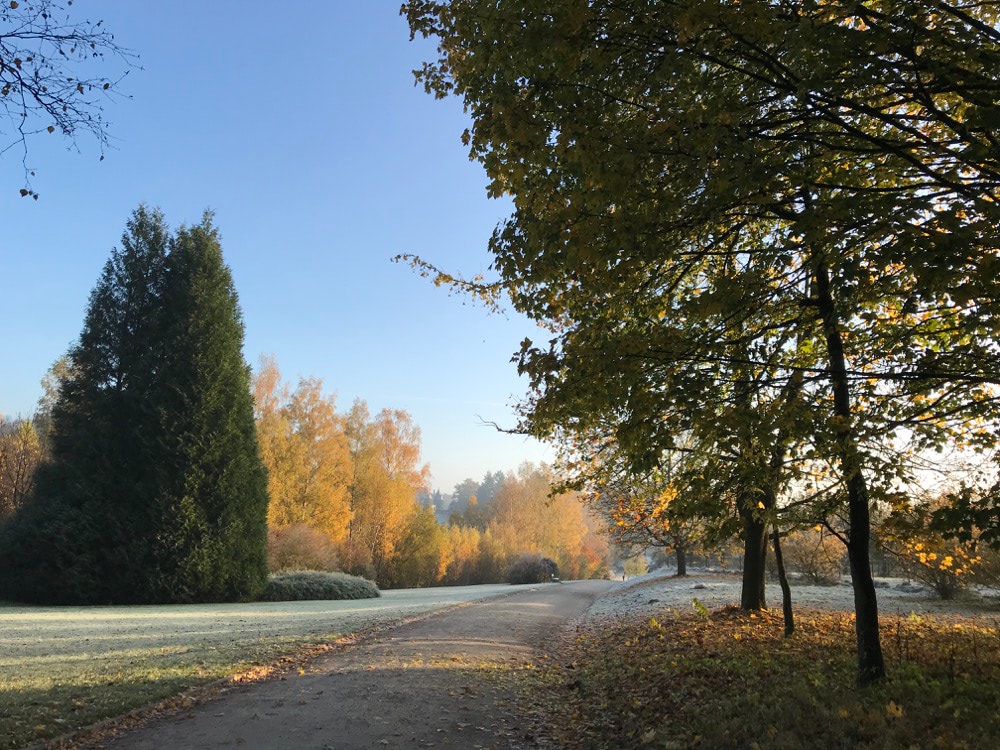
&lt;figure class=&quot;mv4 mh0 flex flex-column ba b--light-gray br4 overflow-hidden&quot;&gt;
  &lt;img class=&quot;w-100 self-stretch replace-embed cover&quot; src=&quot;https://rdmr.eu/assets/img/2019-Museomix-2.jpeg&quot; alt=&quot;Het domein Solvay, op de route van de parkeerplaats naar het museum.&quot;&gt;
  &lt;figcaption class=&quot;bg-brand-light-color brand-middark-color f6 pa3&quot;&gt;
    Bomen in herfst
  &lt;/figcaption&gt;
&lt;/figure&gt;
&lt;p&gt;Museomix werkt met vaste rollen per team en een team wordt ter plekke door een grabbelen per lot bepaald.
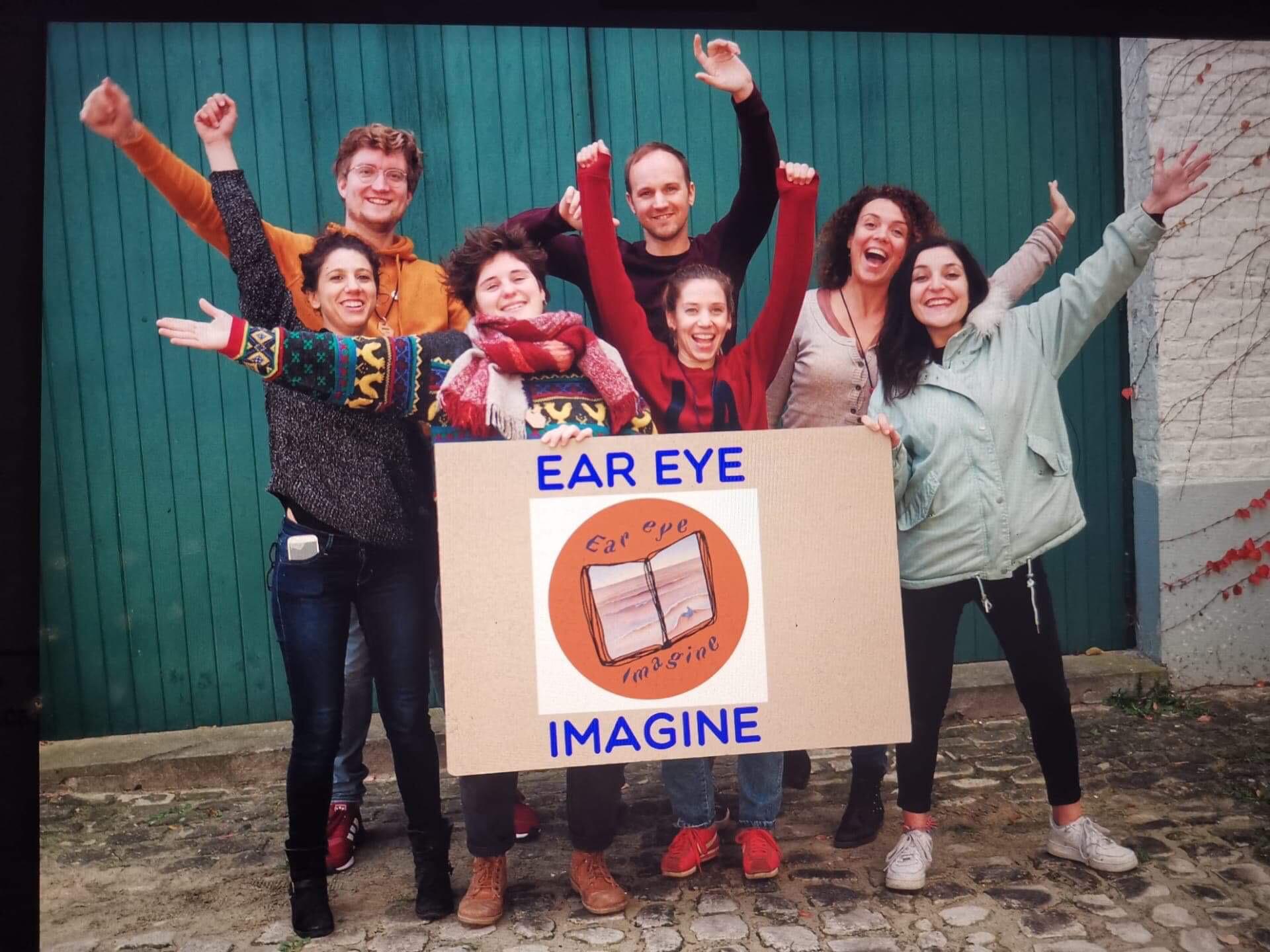
Ik was een &lt;em&gt;coder&lt;/em&gt;, maar daarnaast waren er in het team een &lt;em&gt;maker&lt;/em&gt; (timmervrouw), een graphisch ontwerper, een &lt;em&gt;communicator&lt;/em&gt; (die de sociale media bijhoudt), een &lt;em&gt;content manager&lt;/em&gt; (inhoudelijk verantwoordlijk), een &lt;em&gt;facilitator&lt;/em&gt; (regelneef m/v) en &lt;em&gt;mediator&lt;/em&gt; (meer een UX-rol).
Ik was dus verantwoordelijk voor programmeer- en IT-taken en nadat ik in 2018 had geprobeerd een videolink tussen twee musea op te zetten, wou ik dit jaar liever iets maken wat lokaal draaide.
Dit bleek nog een flinke uitdaging te worden: het blijkt dat als je in je dagelijkse werk gegevensbronnen verwerkt en modelleert, dat niet overdraagbare kennis is voor realtime algoritmische videobewerking.
Wie had dat kunnen bedenken.&lt;/p&gt;
&lt;figure class=&quot;mv4 mh0 flex flex-column ba b--light-gray br4 overflow-hidden&quot;&gt;
  &lt;img class=&quot;w-100 self-stretch replace-embed cover&quot; src=&quot;https://rdmr.eu/assets/img/2019-museomix-team.jpeg&quot; alt=&quot;Het ‘Ear Eye Imagine’ team.&quot;&gt;
  &lt;figcaption class=&quot;bg-brand-light-color brand-middark-color f6 pa3&quot;&gt;
    Zeven juichende teamgenoten.
  &lt;/figcaption&gt;
&lt;/figure&gt;
&lt;p&gt;De opdracht van mijn team: &lt;em&gt;Tell the untold&lt;/em&gt;…
Met het team kregen we als eerste een privérondleiding door het museum, een museum met echt mooie aquarellen en zeefdrukken van Folon.
Je kijkt dan al met een oog voor interactie-mogelijkheden naar de collectie.
Er bleek een connectie te bestaan tussen het kunstwerk &lt;a href=&quot;https://fondationfolon.be/artworks/la-mer-1998/?lang=nl&quot;&gt;&lt;em&gt;La mer&lt;/em&gt;&lt;/a&gt; en een videokunstwerk dat &lt;a href=&quot;https://id.erfgoed.net/erfgoedobjecten/58995&quot;&gt;La Mer, ce grand sculpteur&lt;/a&gt; representeerde.&lt;/p&gt;
&lt;p&gt;&lt;em&gt;Vertel het onvertelde&lt;/em&gt;, dus deze niet-expliciet gemaakte connectie wilden we uitlichten.
We raakten geïnspireerd door &lt;em&gt;La mer&lt;/em&gt; en aan het eind van de dag bedachten we meer onvertelde ervaringen: namelijk die van de bezoekers die het schilderij bekeken.
Ik vond het wel een goed idee een telefoon op te hangen, waaraan bezoekers hun persoonlijke ervaring konden toevertrouwen.
Eenmaal ingesproken, kon dat teruggespeeld worden aan een volgende bezoekers, die dus de persoonlijke ervaring van een onbekende mee kon krijgen.&lt;/p&gt;
&lt;p&gt;Maar mijn teamgenoten wilden daar iets visueels van maken, dus heb ik met &lt;em&gt;VVVV&lt;/em&gt; een realtime audio-verwerker gemaakt dat met een videokernel ook nog een afbeelding aanpaste van het schilderij.
Mooi hierbij wel was dat er een audiolandschap is gemaakt door Anouk Audart en bij de VVVV-kernel heb ik veel hulp gehad van Bela Lawson.&lt;/p&gt;
&lt;h2&gt;Het sprekende boek&lt;/h2&gt;
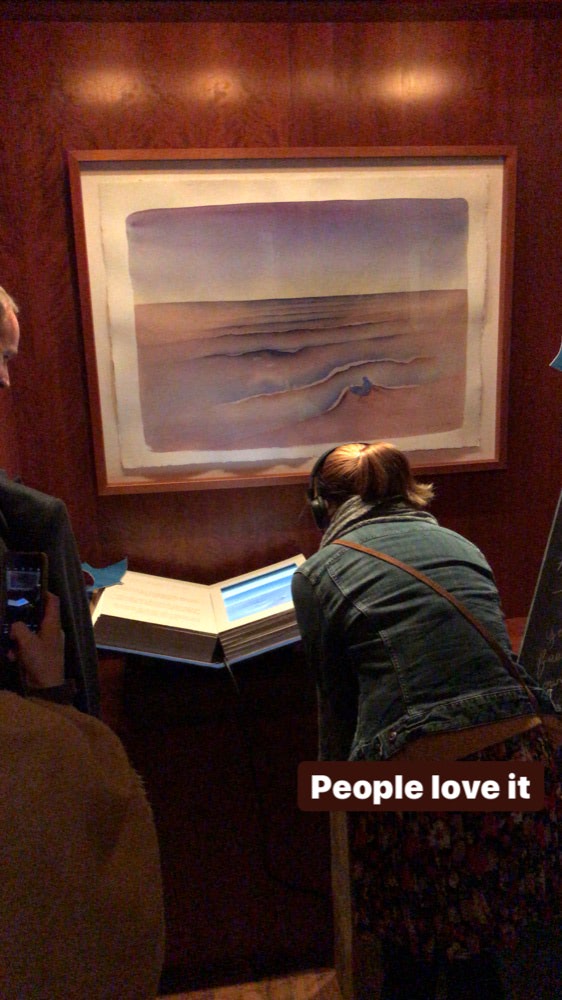
&lt;p&gt;Ons sprekende boek lag open met rechts een scherm dat een live-updatende weergave van het schilderij toonde, en links de onderstaande tekst (in het Frans, Nederlands en Engels):&lt;/p&gt;
&lt;blockquote&gt;
&lt;p&gt;Jean-Michel Folon wil je onderdompelen in het universum van de blauwe man. Vertel
ons wat je in deze aquarel “La Mer” waarneemt? Vrijheid? Verlangen? Rust? Stilte? Het
onbenoemde wordt in dit boek gevisualiseerd en verrijkt de interpretatie van de tekening
voor volgende bezoekers.&lt;/p&gt;
&lt;/blockquote&gt;
&lt;blockquote&gt;
&lt;p&gt;Welkom in de wereld van de blauwe man.&lt;br&gt;
Spreek uw gedachten
en ontdek wat uw stem onthullen kan.&lt;/p&gt;
&lt;/blockquote&gt;
&lt;div class=&quot;measure-narrow&quot;&gt;
&lt;figure class=&quot;mv4 mh0 flex flex-column ba b--light-gray br4 overflow-hidden&quot;&gt;
  &lt;img class=&quot;w-100 self-stretch replace-embed cover&quot; src=&quot;https://rdmr.eu/assets/img/2019-Museomix-1.jpg&quot; alt=&quot;Echte beelden van de tentoonstelling.&quot;&gt;
  &lt;figcaption class=&quot;bg-brand-light-color brand-middark-color f6 pa3&quot;&gt;
    Bezoekers overgebogen over het ‘boek’
  &lt;/figcaption&gt;
&lt;/figure&gt;
&lt;/div&gt;
&lt;p&gt;De code van mijn oplossing staat op &lt;a href=&quot;https://github.com/museomix/2019_BE_ear-eye-imagine&quot;&gt;https://github.com/museomix/2019_BE_ear-eye-imagine&lt;/a&gt;.
Op &lt;a href=&quot;https://www.instagram.com/museomixbe/&quot;&gt;instagram/@museomixbe&lt;/a&gt; zijn meer foto’s van de teams te vinden.&lt;/p&gt;
&lt;p&gt;Wanneer je in het mooie park bent en in de buurt van het museum bent, is het zeker een bezoek waard.
Ons prototype is na zondag uit elkaar gehaald, maar kleuren en thema’s van de werken van Folon blijven mooi.&lt;/p&gt;
</content>
  </entry>
  <entry xml:lang="nl">
    <title type="html">A Linked data view on blog posts</title>
    <link href="https://rdmr.eu/2020/turtle-with-jekyll/" rel="alternate" type="text/html" title="A Linked data view on blog posts"/>
    <updated>2020-09-29T00:00:00Z</updated>
    <id>https://rdmr.eu/2020/turtle-with-jekyll/</id>
    <content type="html">&lt;p class=&quot;f6&quot;&gt;
Dit bericht geeft een voorbeeld hoe Linked data ook werkt met de Liquid sjabloontaal, een onderliggende technologie van deze website. Omwille van het grotere publiek dat gebruik maakt van de publicatiesoftware Jekyll is het in het Engels geschreven.
&lt;/p&gt;
&lt;p&gt;One of my endless list of issues with my website, is the lack of structured and Linked data in its architecture.
Sure, as a static CMS it works fine, and I’m really proud of the trilingual design I hacked onto Jekyll, but: as Linked data export in my day-to-day job, I should incorporate some of it on my private website.&lt;/p&gt;
&lt;p&gt;So, I decided to first start with a simple meta-data export, that embraces Linked data standards.
I felt that, of the several serializations of Linked data, &lt;em&gt;Turtle&lt;/em&gt; is easiest to read and write for us humans.
Other formats, like JSON-LD and XML, are perhaps more widely supported, but with important caveats:
JSON is tedious to write, XML moreso, and RDF-XML has some semantics issues (oh irony!).
As the different serializations encode the exact same information, a data consumer may also convert the resultant Turtle-file to their favorite syntax.&lt;/p&gt;
&lt;p&gt;As for the information modelling, I chose to use &lt;a href=&quot;http://schema.org/&quot;&gt;Schema.org&lt;/a&gt; ontology.
Founded by several search engine companies for SEO-purposes, it is a great generic ontology for many knowledge projects.
Its key concepts for this excersice are &lt;code&gt;schema:Blog&lt;/code&gt; for the blogroll and &lt;code&gt;schema:BlogPosting&lt;/code&gt; for the individual posts.&lt;/p&gt;
&lt;pre class=&quot;language-turtle&quot;&gt;&lt;code class=&quot;language-turtle&quot;&gt;---
&lt;span class=&quot;token keyword&quot;&gt;@prefix&lt;/span&gt; &lt;span class=&quot;token function&quot;&gt;&lt;span class=&quot;token prefix&quot;&gt;schema&lt;span class=&quot;token punctuation&quot;&gt;:&lt;/span&gt;&lt;/span&gt;&lt;/span&gt; &lt;span class=&quot;token url&quot;&gt;&lt;span class=&quot;token punctuation&quot;&gt;&amp;lt;&lt;/span&gt;http://schema.org/&lt;span class=&quot;token punctuation&quot;&gt;&gt;&lt;/span&gt;&lt;/span&gt;&lt;span class=&quot;token punctuation&quot;&gt;.&lt;/span&gt;
&lt;span class=&quot;token keyword&quot;&gt;@prefix&lt;/span&gt; &lt;span class=&quot;token function&quot;&gt;&lt;span class=&quot;token prefix&quot;&gt;xsd&lt;span class=&quot;token punctuation&quot;&gt;:&lt;/span&gt;&lt;/span&gt;&lt;/span&gt; &lt;span class=&quot;token url&quot;&gt;&lt;span class=&quot;token punctuation&quot;&gt;&amp;lt;&lt;/span&gt;http://www.w3.org/2001/XMLSchema#&lt;span class=&quot;token punctuation&quot;&gt;&gt;&lt;/span&gt;&lt;/span&gt;&lt;span class=&quot;token punctuation&quot;&gt;.&lt;/span&gt;

&lt;span class=&quot;token keyword&quot;&gt;@base&lt;/span&gt; &amp;lt;&lt;span class=&quot;token punctuation&quot;&gt;{&lt;/span&gt;&lt;span class=&quot;token punctuation&quot;&gt;{&lt;/span&gt;site&lt;span class=&quot;token punctuation&quot;&gt;.&lt;/span&gt;url&lt;span class=&quot;token punctuation&quot;&gt;}&lt;/span&gt;&lt;span class=&quot;token punctuation&quot;&gt;}&lt;/span&gt;&gt;&lt;span class=&quot;token punctuation&quot;&gt;.&lt;/span&gt;

&lt;span class=&quot;token url&quot;&gt;&lt;span class=&quot;token punctuation&quot;&gt;&amp;lt;&lt;/span&gt;https://rdmr.eu/&lt;span class=&quot;token punctuation&quot;&gt;&gt;&lt;/span&gt;&lt;/span&gt; &lt;span class=&quot;token keyword&quot;&gt;a&lt;/span&gt; &lt;span class=&quot;token function&quot;&gt;&lt;span class=&quot;token prefix&quot;&gt;schema&lt;span class=&quot;token punctuation&quot;&gt;:&lt;/span&gt;&lt;/span&gt;&lt;span class=&quot;token local-name&quot;&gt;Blog&lt;/span&gt;&lt;/span&gt; &lt;span class=&quot;token punctuation&quot;&gt;;&lt;/span&gt;
    &lt;span class=&quot;token function&quot;&gt;&lt;span class=&quot;token prefix&quot;&gt;schema&lt;span class=&quot;token punctuation&quot;&gt;:&lt;/span&gt;&lt;/span&gt;&lt;span class=&quot;token local-name&quot;&gt;name&lt;/span&gt;&lt;/span&gt; &lt;span class=&quot;token string&quot;&gt;&quot;Rdmr.eu&quot;&lt;/span&gt; &lt;span class=&quot;token punctuation&quot;&gt;;&lt;/span&gt;
    &lt;span class=&quot;token punctuation&quot;&gt;.&lt;/span&gt;&lt;/code&gt;&lt;/pre&gt;
&lt;p&gt;I started with a new file called &lt;code&gt;posts.ttl&lt;/code&gt; that can be put anywhere in the Jekyll project.
Note the two initial lines with triple dashes (&lt;code&gt;---&lt;/code&gt;).
These tell the Jekyll processor that this file contains Liquid markup and that those tags needs to be rendered first.&lt;/p&gt;
&lt;p&gt;The prefix directives are used for the referred ontologies or schemas:
here I use aforementioned Schema.org and the XML Schema Definition, explained later on.
The &lt;code&gt;@base&lt;/code&gt; directive provide a base for relative URIs.
The actual URI is rendered by Liquid, getting its value from the site settings.
That makes this template flexible for use in Jekyll templates, as well.&lt;/p&gt;
&lt;p&gt;The first triples it contains is static information.
In this example, just the blog roll, typed as Schema.org’s &lt;a href=&quot;http://schema.org/Blog&quot;&gt;Blog&lt;/a&gt;.
I prefer to start hand-written Turtle files with some basic information, with statements that declare the files origin or purpose.
Here, we’re talking about a blogroll, yet where are the posts?&lt;/p&gt;
&lt;pre class=&quot;language-turtle&quot;&gt;&lt;code class=&quot;language-turtle&quot;&gt;&lt;span class=&quot;token comment&quot;&gt;# Metadata on the blogposts&lt;/span&gt;
&lt;span class=&quot;token punctuation&quot;&gt;{&lt;/span&gt;% for p in site&lt;span class=&quot;token punctuation&quot;&gt;.&lt;/span&gt;posts -%&lt;span class=&quot;token punctuation&quot;&gt;}&lt;/span&gt;
&amp;lt;&lt;span class=&quot;token punctuation&quot;&gt;{&lt;/span&gt;&lt;span class=&quot;token punctuation&quot;&gt;{&lt;/span&gt;p&lt;span class=&quot;token punctuation&quot;&gt;.&lt;/span&gt;url&lt;span class=&quot;token punctuation&quot;&gt;}&lt;/span&gt;&lt;span class=&quot;token punctuation&quot;&gt;}&lt;/span&gt;&gt; &lt;span class=&quot;token keyword&quot;&gt;a&lt;/span&gt; &lt;span class=&quot;token function&quot;&gt;&lt;span class=&quot;token prefix&quot;&gt;schema&lt;span class=&quot;token punctuation&quot;&gt;:&lt;/span&gt;&lt;/span&gt;&lt;span class=&quot;token local-name&quot;&gt;BlogPosting&lt;/span&gt;&lt;/span&gt; &lt;span class=&quot;token punctuation&quot;&gt;;&lt;/span&gt;
    &lt;span class=&quot;token function&quot;&gt;&lt;span class=&quot;token prefix&quot;&gt;schema&lt;span class=&quot;token punctuation&quot;&gt;:&lt;/span&gt;&lt;/span&gt;&lt;span class=&quot;token local-name&quot;&gt;author&lt;/span&gt;&lt;/span&gt; &lt;span class=&quot;token url&quot;&gt;&lt;span class=&quot;token punctuation&quot;&gt;&amp;lt;&lt;/span&gt;https://rdmr.eu/#me&lt;span class=&quot;token punctuation&quot;&gt;&gt;&lt;/span&gt;&lt;/span&gt; &lt;span class=&quot;token punctuation&quot;&gt;;&lt;/span&gt;
    &lt;span class=&quot;token function&quot;&gt;&lt;span class=&quot;token prefix&quot;&gt;schema&lt;span class=&quot;token punctuation&quot;&gt;:&lt;/span&gt;&lt;/span&gt;&lt;span class=&quot;token local-name&quot;&gt;name&lt;/span&gt;&lt;/span&gt; &lt;span class=&quot;token string&quot;&gt;&quot;{{p.title}}&quot;&lt;/span&gt;&lt;span class=&quot;token tag&quot;&gt;&lt;span class=&quot;token punctuation&quot;&gt;@&lt;/span&gt;nl&lt;/span&gt; &lt;span class=&quot;token punctuation&quot;&gt;;&lt;/span&gt;
    &lt;span class=&quot;token function&quot;&gt;&lt;span class=&quot;token prefix&quot;&gt;schema&lt;span class=&quot;token punctuation&quot;&gt;:&lt;/span&gt;&lt;/span&gt;&lt;span class=&quot;token local-name&quot;&gt;datePublished&lt;/span&gt;&lt;/span&gt; &lt;span class=&quot;token string&quot;&gt;&quot;{{p.date | date_to_xmlschema}}&quot;&lt;/span&gt;&lt;span class=&quot;token punctuation&quot;&gt;^^&lt;/span&gt;&lt;span class=&quot;token function&quot;&gt;&lt;span class=&quot;token prefix&quot;&gt;xsd&lt;span class=&quot;token punctuation&quot;&gt;:&lt;/span&gt;&lt;/span&gt;&lt;span class=&quot;token local-name&quot;&gt;dateTime&lt;/span&gt;&lt;/span&gt; 
    &lt;span class=&quot;token punctuation&quot;&gt;.&lt;/span&gt;
&lt;span class=&quot;token punctuation&quot;&gt;{&lt;/span&gt;% endfor %&lt;span class=&quot;token punctuation&quot;&gt;}&lt;/span&gt;
&lt;/code&gt;&lt;/pre&gt;
&lt;p&gt;Now for the actual data, we use the Schema.org’s &lt;a href=&quot;http://schema.org/BlogPosting&quot;&gt;BlogPosting&lt;/a&gt; class to type the individual posts.
Those are generated (unsorted) by the &lt;code&gt;for p in site.posts&lt;/code&gt; template.
Usually, I would explicitely sort such generators, but considering Linked data has no concept of order, this complexity was not needed.&lt;/p&gt;
&lt;p&gt;They get some author info (in this example something static) and dynamically retrieve the post title.
Note that we need a Liquid filter on the post’s date to render it as a XML-Schema compatible date.
Also note that, although not obligatory, I’ve typed the string literal as a &lt;code&gt;xsd:dateTime&lt;/code&gt;.
That can help data consumers correctly process this statement.&lt;/p&gt;
&lt;pre class=&quot;language-turtle&quot;&gt;&lt;code class=&quot;language-turtle&quot;&gt;&lt;span class=&quot;token comment&quot;&gt;# Linking the blogposts to the blog&lt;/span&gt;
&lt;span class=&quot;token punctuation&quot;&gt;{&lt;/span&gt;% for p in site&lt;span class=&quot;token punctuation&quot;&gt;.&lt;/span&gt;posts -%&lt;span class=&quot;token punctuation&quot;&gt;}&lt;/span&gt;
&lt;span class=&quot;token url&quot;&gt;&lt;span class=&quot;token punctuation&quot;&gt;&amp;lt;&lt;/span&gt;https://rdmr.eu/&lt;span class=&quot;token punctuation&quot;&gt;&gt;&lt;/span&gt;&lt;/span&gt; &lt;span class=&quot;token function&quot;&gt;&lt;span class=&quot;token prefix&quot;&gt;schema&lt;span class=&quot;token punctuation&quot;&gt;:&lt;/span&gt;&lt;/span&gt;&lt;span class=&quot;token local-name&quot;&gt;blogPost&lt;/span&gt;&lt;/span&gt; &amp;lt;&lt;span class=&quot;token punctuation&quot;&gt;{&lt;/span&gt;&lt;span class=&quot;token punctuation&quot;&gt;{&lt;/span&gt;p&lt;span class=&quot;token punctuation&quot;&gt;.&lt;/span&gt;url&lt;span class=&quot;token punctuation&quot;&gt;}&lt;/span&gt;&lt;span class=&quot;token punctuation&quot;&gt;}&lt;/span&gt;&gt; &lt;span class=&quot;token punctuation&quot;&gt;.&lt;/span&gt;
&lt;span class=&quot;token punctuation&quot;&gt;{&lt;/span&gt;%- endfor -%&lt;span class=&quot;token punctuation&quot;&gt;}&lt;/span&gt;
&lt;/code&gt;&lt;/pre&gt;
&lt;p&gt;Then finally, the blog postings are linked to the previously defined blogroll.&lt;/p&gt;
&lt;p&gt;I hope this post gives some pointers towards implementing data views on Jekyll sites.
If have any comments, drop me a line on Twitter &lt;a href=&quot;https://twitter.com/redmer&quot;&gt;@redmer&lt;/a&gt;.&lt;/p&gt;
</content>
  </entry>
  <entry xml:lang="nl">
    <title type="html">UI-vertalingen in het Nederlands</title>
    <link href="https://rdmr.eu/2019/techtaal/" rel="alternate" type="text/html" title="UI-vertalingen in het Nederlands"/>
    <updated>2019-06-29T00:00:00Z</updated>
    <id>https://rdmr.eu/2019/techtaal/</id>
    <content type="html">&lt;p&gt;Steeds meer apps en websites worden beschikbaar gemaakt in het Nederlands.
De gemaakte vertalingen kijken daar bij apps vaak naar platformconventies, aangezien er vaak gebruikt gemaakt kan woren van bestaande interfacecomponenten die door het besturingssysteem voorvertaald zijn.
Denk aan &lt;code&gt;Gereed&lt;/code&gt; op een schuifpaneel op iOS.&lt;/p&gt;
&lt;p&gt;Maar op het web geldt er niet zo&#39;n conventie.
Dit artikel somt de platformconventies op van Apple&#39;s iOS, macOS, van Microsoft Windows en Office en die van Google op Android en Docs.&lt;/p&gt;
&lt;p&gt;De vertaling is namelijk substantieel anders:
niet alleen kiest Apple voor &lt;em&gt;“Bewaren”&lt;/em&gt; en niet &lt;em&gt;“Opslaan”&lt;/em&gt;, er is ook een andere werkwoordsvorm gekozen.
Apple vertaalt ook commando&#39;s op knoppen met een gebiedende wijs (&lt;em&gt;“Bewaar”&lt;/em&gt;).
Dit komt naar alle waarschijnlijkheid omdat het Engels geen morfologisch verschil laat zien tussen het hele werkwoord en de gebiedende wijs.&lt;/p&gt;
&lt;p&gt;Iets dergelijks zie je ook bij interface-elementen die een proces aangeven:
in het Engels wordt een progressief werkwoordsaspect (&lt;em&gt;continuous&lt;/em&gt;) gebruikt, dat wisselend vertaald wordt.
In het Nederlands wordt dat aspect liever perifrastisch uitgedrukt (&lt;em&gt;“Bezig met opslaan”&lt;/em&gt;).
Opvallend genoeg is dat alleen zo vertaald bij Google;
gelukkig is het niet vertaald (in vertalingen door mensen) met &lt;em&gt;“Opslaand”&lt;/em&gt;.&lt;/p&gt;
&lt;p&gt;Deze verschillen heb ik in onderstaande tabel neergezet:&lt;/p&gt;
&lt;table&gt;
&lt;thead&gt;
&lt;tr&gt;
&lt;th&gt;Engels&lt;/th&gt;
&lt;th&gt;Apple&lt;/th&gt;
&lt;th&gt;Microsoft&lt;/th&gt;
&lt;th&gt;Google&lt;/th&gt;
&lt;/tr&gt;
&lt;/thead&gt;
&lt;tbody&gt;
&lt;tr&gt;
&lt;td&gt;Show&lt;/td&gt;
&lt;td&gt;Toon&lt;/td&gt;
&lt;td&gt;Weergeven&lt;/td&gt;
&lt;/tr&gt;
&lt;tr&gt;
&lt;td&gt;Open&lt;/td&gt;
&lt;td&gt;&lt;strong&gt;Openen&lt;/strong&gt;&lt;/td&gt;
&lt;/tr&gt;
&lt;tr&gt;
&lt;td&gt;Print&lt;/td&gt;
&lt;td&gt;Druk af&lt;/td&gt;
&lt;td&gt;Afdrukken&lt;/td&gt;
&lt;/tr&gt;
&lt;tr&gt;
&lt;td&gt;Cancel&lt;/td&gt;
&lt;td&gt;Annuleer&lt;/td&gt;
&lt;td&gt;Annuleren&lt;/td&gt;
&lt;/tr&gt;
&lt;tr&gt;
&lt;td&gt;Opening&lt;/td&gt;
&lt;td&gt;&lt;strong&gt;Openen&lt;/strong&gt;&lt;/td&gt;
&lt;td&gt;Bezig met openen&lt;/td&gt;
&lt;/tr&gt;
&lt;tr&gt;
&lt;td&gt;Saving&lt;/td&gt;
&lt;td&gt;Bewaren&lt;/td&gt;
&lt;td&gt;Opslaan&lt;/td&gt;
&lt;td&gt;Bezig met opslaan&lt;/td&gt;
&lt;/tr&gt;
&lt;/tbody&gt;
&lt;/table&gt;
&lt;p&gt;Ik vind zelf de gebiedende wijs wel passend om commando’s aan apparatuur te geven.
Opvallend vind ik ook dat in Microsoft’s vertaling het verschil tussen ’Open’ en ’Opening’ wegvalt.&lt;/p&gt;
</content>
  </entry>
  <entry xml:lang="nl">
    <title type="html">Linked Spatial Data</title>
    <link href="https://rdmr.eu/2019/spatial-linked-data/" rel="alternate" type="text/html" title="Linked Spatial Data"/>
    <updated>2019-03-31T00:00:00Z</updated>
    <id>https://rdmr.eu/2019/spatial-linked-data/</id>
    <content type="html">&lt;p&gt;Linked data is niet alleen in de geesteswetenschappen &lt;em&gt;hot topic&lt;/em&gt;, ook voor geografische toepassingen bieden gelinkte gegevens voordelen.
Afgelopen 12 maart bezocht ik in Amersfoort het SDI Next-evenement “Linked Spatial Data in Europe”.
Het doel van de bijeenkomst is een overzicht van implementaties van linkende ruimtelijke gegevens in Europa.
Ik vond de bijeenkomst leerzaam, met een paar trends: daarom dit verslag, waarbij ik alleen onderwerpen uitlicht waar ik meer over weet.
Locatie was het kantoor van de Rijksdienst voor Cultureel Erfgoed, met zo&#39;n 100 aanwezigen.
&lt;a href=&quot;http://www.pilod.nl/wiki/SDI.Next:_Linked_Spatial_Data_in_Europe_%E2%80%93_March_12th,_2019&quot;&gt;Alle presentaties&lt;/a&gt; zijn ook beschikbaar gesteld.
Handig voor als je interesse is gewekt.&lt;/p&gt;
&lt;h3&gt;Natuurlijke taalverwerking&lt;/h3&gt;
&lt;p&gt;De openingskeynote werd verzorgd door Simon Scheider (van Universiteit Utrecht).
Zijn onderzoeksproject, “Question-based analysis of geographic information with semantic queries”, stelt een theoretisch en computationeel kader vast voor een GIS-infrastructuur gebaseerd op semantischewebtechnologieën.
Populairder gezegd, hoe kun je Alexa vragen, “hoe fiets ik de groenste route naar werk?”.
De antwoorden op zulke analytische vragen staan niet in één database, waarvoor semantische (en dus koppelbare*) bronnen dus een uitkomst zijn.
Scheider stelde een serie koppelconcepten voor die de grondslagen moeten vormen voor een geautomatische analyse.
Interessant, naast de onderliggendste concepten, vond ik de integratie van NLP om een kennisgraaf op te bouwen.
Dat doet me denken aan een presentatie die ik heb gezien over NLP-technieken om een kennisbank op te bouwen van GraphAware (dat product heet Hume, maar de bijbehorende website is – bij schrijven – al een week uit de lucht).&lt;/p&gt;
&lt;p&gt;Raf Buyle (van Informatie Vlaanderen) vertelde over de implementatie van Linked Open Data in Vlaanderen.
Zo kun je informatie over gebouwen en adressen heel eenvoudig opvragen (zie hieronder).
Dat het meteen werkte in de console vond ik erg prettig aan deze API.
Bijzonder interessant vond ik de supervised entiteitsherkenning die gebruikt wordt in een notuleer-webapp voor gemeentes.
Dit project, &lt;a href=&quot;https://github.com/lblod&quot;&gt;“Lokale besluiten als Gelinkte Open Data”&lt;/a&gt;, koppelt bijvoorbeeld wetgevingsreferenties aan de identifiets van die wetgevingssecties.
Ik heb een voorbeeld gevonden van de &lt;a href=&quot;https://publicatie.gelinkt-notuleren.vlaanderen.be/Alken/Gemeente/9ea8a481-3532-11e9-a984-7db43f975d75/notulen&quot;&gt;notulen van de gemeenteraad van Alken&lt;/a&gt; waarin wetscitaten gekoppeld worden aan de daadwerkelijke wetstekst.
Erg leuk.&lt;/p&gt;
&lt;pre class=&quot;language-bash&quot;&gt;&lt;code class=&quot;language-bash&quot;&gt;$ &lt;span class=&quot;token function&quot;&gt;curl&lt;/span&gt; &lt;span class=&quot;token parameter variable&quot;&gt;-H&lt;/span&gt; &lt;span class=&quot;token string&quot;&gt;&quot;Accept: application/json&quot;&lt;/span&gt; http://data.vlaanderen.be/id/adres/3706808&lt;/code&gt;&lt;/pre&gt;
&lt;h3&gt;Standaardisatie&lt;/h3&gt;
&lt;p&gt;Gelinkte gegevens worden vaak als RDF in XML of JSON-LD ter beschikking gesteld, maar het RDF-model (of &lt;em&gt;semantische&lt;/em&gt; model) is niet het enige type graafdatabank.
Er zijn ook eigenschapsgraafdatabanken (&lt;em&gt;labeled-property graph databases&lt;/em&gt;) zoals Neo4j, die naast relaties tussen gegevens, ook eigenschappen kunnen toevoegen aan de knopen in de graaf én aan de zijden tussen die knopen.
Het eerste model valt onder de auspiciën van de W3C, maar het laatste model is niet gestandaardiseerd over leveranciers heen.
De W3C zag kansen voor standaardisering en organiseerde een vergadering, die wonderwel uitliepen op een voorstel voor convergentie:
er zouden eigenschappen kunnen worden toegevoegd gaan aan één predicaat in een RDF-graaf.
Er was een kort verslag van deze bijeenkomst door Ivan Herman.
Dit moet nog uitgewerkt worden, want betekent dat dan een compacte syntax voor reïficatie of betekent het een toevoeging op het datamodel.
Ik ben erg benieuwd naar hoe snel dit opgepakt gaat worden in databanksystemen: eigenschappen op relaties zijn een handig voor veel modellen.&lt;/p&gt;
&lt;p&gt;Standaardisatie kwam ook langs in de ‘pitch’ van Frans Knibbe (van Geodan), die om één ontologie voor ruimte vroeg.
Er is al een ontologie voor tijd (verrassed genoeg &lt;a href=&quot;https://www.w3.org/TR/owl-time/&quot;&gt;Time&lt;/a&gt; geheten), maar voor ruimtelijke concepten zijn er concurrerende uitgangspunten.
Computerbeelden werken met polygonen, BIM werkt met uitgetrokken 2D-vlakken, terwijl GIS voornamelijk met punten werkt.
Dan zijn er nog geografen, bodemwetenschappers, seismologen, astronomen: allemaal wetenschappers met geografische data, waarvan ook van andere planeten:
denk maar eens na hoeveel aannames in jouw code gebaseerd zijn op de eigenschappen van planeet Aarde.
Ook op microniveau wordt er met ruimtelijke data gewerkt, noemde Knibbe, denk aan microbiologen en structuurscheikundigen.
Wie weet of er bij de volgende SDI Next-bijeenkomst over 3 jaar stappen zijn gezet.&lt;/p&gt;
&lt;!-- Knibbe benoemde drie concrete behoeften: een ruimtelijke referentiesysteem; een manier om de ruimtelijke distributie of vorm in te geven; functies die op deze gegevens werken.  --&gt;
&lt;h3&gt;Koppelen van databronnen&lt;/h3&gt;
&lt;p&gt;Onderstaande schermfoto is van een toepassing van Triply in samenwerking met het Kadaster, gepresenteerd door Wouter Beek (van Triply).
De LOD van het Kadaster hebben zij uitgebreid met automatisch gegenereerde polygonen (het grondoppervlak × de geregistreerde hoogte van het object) en dat met Sparql doorzoekbaar gemaakt.
Dankzij een uitbereiding op Yasgui konden deze gegevens (denk ook GeoSparql) ingelezen worden in een interactieve 3d-demonstratie.
Dit lijkt een praktijkvoorbeeld te zijn dat het voorgenoemde verhaal van Knibbe ondersteunt.&lt;/p&gt;
&lt;figure class=&quot;mv4 mh0 flex flex-column ba b--light-gray br4 overflow-hidden&quot;&gt;
  &lt;img class=&quot;w-100 self-stretch replace-embed cover&quot; src=&quot;https://rdmr.eu/assets/img/bag-3d.png&quot; alt=&quot;Screenshot van 3D-gebouw op een platte, perspectivische kaart.&quot;&gt;
  &lt;figcaption class=&quot;bg-brand-light-color brand-middark-color f6 pa3&quot;&gt;
    De 3d-opgetrokken versie van het conferentiegebouw (&lt;a href=&quot;https://demo.triply.cc/kadaster/bag/sparql/bag&quot;&gt;Bron&lt;/a&gt;).
  &lt;/figcaption&gt;
&lt;/figure&gt;
&lt;p&gt;Ter afsluiting presenteerde Bill Roberts (van Swirrl), de &lt;a href=&quot;https://www.w3.org/TR/2017/NOTE-sdw-bp-20170928/#bp-summary&quot;&gt;&lt;em&gt;best practices&lt;/em&gt;&lt;/a&gt; voor ruimtelijke data op het web.
Die heb ik hieronder herhaald (en vertaald), opdat we ze ter harte nemen:&lt;/p&gt;
&lt;ol&gt;
&lt;li&gt;Wijs unieke, blijvende HTTP URIs toe voor je ruimtelijke gegevens.&lt;/li&gt;
&lt;li&gt;Maak je gegevens vindbaar voor zoekmachines.&lt;/li&gt;
&lt;li&gt;Link gegevensbronnen met elkaar om je eigen dataweb te maken.&lt;/li&gt;
&lt;li&gt;Maak gebruik van gegevensformaten die jouw doelgroep nodig heeft.&lt;/li&gt;
&lt;li&gt;Stel geometrieën op een bruikbare manier beschikbaar.&lt;/li&gt;
&lt;li&gt;Stel geometrieën beschikbaar met het juiste niveau van correctheid, nauwkeurigheid en grootte.&lt;/li&gt;
&lt;li&gt;Kies een coördinatenstelsel dat op jouw doelgroep aansluit.&lt;/li&gt;
&lt;li&gt;Beschrijf duidelijk hoe coördinaten zijn genoteerd.&lt;/li&gt;
&lt;li&gt;Maak relatieve aanduidingen eenduidig interpreteerbaar.&lt;/li&gt;
&lt;li&gt;Gebruik geschikte relatie-types om ruimtelijke gegevens te linken.&lt;/li&gt;
&lt;li&gt;Maak duidelijk hoe ruimtelijke zaken kunnen veranderen.&lt;/li&gt;
&lt;li&gt;Maak ruimtelijke gegevens eenvoudig beschikbaar via ‘gemaks-APIs’.&lt;/li&gt;
&lt;li&gt;Geef ruimtelijke eigenschappen mee in de datasetmetadata.&lt;/li&gt;
&lt;li&gt;Beschrijf de positienauwkeurigheid van de ruimtelijke gegevens.&lt;/li&gt;
&lt;/ol&gt;
&lt;p&gt;Er waren ook nog veel presentaties die de status van gelinkte geodata of van dataplatforms in Slowakijke, Oostenrijk, Frankrijk, Noorwegen, Nederland (&lt;a href=&quot;https://pdok.nl/&quot;&gt;PDOK&lt;/a&gt;), Finland, Spanje en Zwitserland behandelden.
De staat van implementatie blijkt erg te wisselen tussen landen, waarbij Frankrijk opviel door de lage prioriteit die er aan LOD werd gegeven.&lt;/p&gt;
&lt;h3&gt;Afsluiting&lt;/h3&gt;
&lt;p&gt;Deze bijeenkomst gaf een overzicht van de ontwikkelingen en kansen bij gelinkte ruimtelijke gegevens.
Vanuit een Digital-Humanities-oogpunt ben ik erg benieuwd naar de geautomatiseerde mogelijkheden om natuurlijke taalverwerking teksten te laten annoteren en tegelijkertijd een kennisbank op te laten stellen.
Zie jij andere trends in de geowereld of komen er nieuwe ontwikkelingen aan in de Linked Data-wereld?
Laat het me weten &lt;a href=&quot;https://twitter.com/redmer&quot;&gt;via Twitter&lt;/a&gt; of &lt;a href=&quot;https://rdmr.eu/contact/#email&quot;&gt;per mail&lt;/a&gt;.&lt;/p&gt;
</content>
  </entry>
  <entry xml:lang="nl">
    <title type="html">Thanks, Charazani</title>
    <link href="https://rdmr.eu/2018/thanks-charazani/" rel="alternate" type="text/html" title="Thanks, Charazani"/>
    <updated>2018-12-13T00:00:00Z</updated>
    <id>https://rdmr.eu/2018/thanks-charazani/</id>
    <content type="html">&lt;p&gt;In May and June 2016, I did fieldwork research in the Charazani valley, Bolivia.
It formed the basis of my Master’s thesis, a sketch grammar of the Quechua spoken in the area.
Quechua is a native American language family, with between 5 and 10 million speakers more-or-less in the Andes mountain range, from Ecuador to Argentina.
The Charazani area is interesting for its proximity to multiple language areas and its relative isolation.
My supervisors was Mily Crevels, second supervisor was Pieter Muysken.&lt;/p&gt;
&lt;figure class=&quot;mv4 mh0 flex flex-column ba b--light-gray br4 overflow-hidden&quot;&gt;
  &lt;img class=&quot;w-100 self-stretch replace-embed cover&quot; src=&quot;https://rdmr.eu/assets/img/charazani-qucha.jpg&quot; alt=&quot;Foto van voetbalveld in een dorp met achtergrond van bergen&quot;&gt;
  &lt;figcaption class=&quot;bg-brand-light-color brand-middark-color f6 pa3&quot;&gt;
    A view of Charazani from its former lake.
  &lt;/figcaption&gt;
&lt;/figure&gt;
&lt;p&gt;I want to publicly express my thanks towards all informants that have helped me with the Quechua language and all other people that made my lonely stay a bit better. Quiero expresar mi más sincero agradecimiento a Cristóforo Oblitas, Justa Andulce, Prudencio Juárez, my main language consultants.&lt;/p&gt;
&lt;p&gt;Sonia and Octavio Mendes (Jatichulaya); “Blanco” and “Blanquito”, and Lucía and Nestor Andulce (Chullina); Aurelio Ortiz (Lunlaya); Salomé Gonzales and Graciela Álvarez; Doña Sofía (Charazani). Iru Rodríguez Miranda’s (La Paz). &lt;em&gt;Usparasunkichis&lt;/em&gt;.&lt;/p&gt;
&lt;p&gt;Also outside of Bolivia I’ve had help: the trip was funded in-part by my parents, thank you for the opportunity. Hilde Gunnink lend me her recorder, so much better than a phone! Thank you. I want to thank Pieter Muysken for his suggestion of Charazani as a place for fieldwork. Mily Crevels was a great supervisor, who also gave me the opportunity to publish my thesis. Bas Clercx helpt me go through it all, both afar and closeby. Thank you all.&lt;/p&gt;
&lt;h2&gt;Publication&lt;/h2&gt;
&lt;p&gt;Thanks to Mily Crevels, I’ve been given the opportunity to publish my thesis.
This will be the first recent grammar sketch of the under-researched North Bolivian Quechua branch.&lt;/p&gt;
&lt;p&gt;This blog post will be updated with a reference to the future publication of my thesis, but with the publication nearing, I will also publish some excerpts of the grammar.&lt;/p&gt;
</content>
  </entry>
  <entry xml:lang="nl">
    <title type="html">Brabantse erfgoedontmoeting 2018</title>
    <link href="https://rdmr.eu/2018/erfgoedontmoeting/" rel="alternate" type="text/html" title="Brabantse erfgoedontmoeting 2018"/>
    <updated>2018-10-04T00:00:00Z</updated>
    <id>https://rdmr.eu/2018/erfgoedontmoeting/</id>
    <content type="html">&lt;p&gt;Een maand geleden ben ik verhuisd naar Breda.
Het betekent voor mij een nieuwe stad in een nieuw landsdeel en
het leek me daarom een goed idee zo snel mogelijk allerlei bijeenkomsten bij te wonen.
Misschien voelde ik me er dan sneller thuis.&lt;/p&gt;
&lt;p&gt;Zo kon ik in Breda de ‘Erfgoedontmoeting’ bijwonen, georganiseerd door &lt;a href=&quot;https://www.erfgoedbrabant.nl/projecten/de-erfgoedontmoeting/&quot;&gt;Erfgoed Brabant&lt;/a&gt;.
Die omschrijft het als “dé jaarlijkse netwerkbijeenkomst om samen te bouwen aan de toekomst van het Brabantse verleden”.&lt;/p&gt;
&lt;blockquote class=&quot;twitter-tweet&quot; data-dnt=&quot;true&quot;&gt;&lt;p lang=&quot;nl&quot; dir=&quot;ltr&quot;&gt;Vandaag bij de Erfgoedontmoeting van &lt;a href=&quot;https://twitter.com/ErfgoedBrabant?ref_src=twsrc%5Etfw&quot;&gt;@ErfgoedBrabant&lt;/a&gt;. Het begint met de verbeeldingskracht van Erfgoed 💐&lt;/p&gt;&amp;mdash; Redmer (@redmer) &lt;a href=&quot;https://twitter.com/redmer/status/1042694240554430464?ref_src=twsrc%5Etfw&quot;&gt;September 20, 2018&lt;/a&gt;&lt;/blockquote&gt;
&lt;p&gt;Het thema was ‘de verbeeldingskracht van erfgoed’, wat meteen geïllustreerd werd door kunstenaar Rocco Verdult.
Hij organiseert activiteiten die een betrokkenen een gevoel van saamhorigheid moeten geven.
Voor deze bijeenkomst had-ie voorbeelden van ondermeer een historische wijk zonder sociale cohesie, die hij probeerde terug te brengen.
Het klinkt wel inspirationeel, maar het is niet het soort erfgoedverbeelding waar ik mee werk.&lt;/p&gt;
&lt;figure class=&quot;mv4 mh0 flex flex-column ba b--light-gray br4 overflow-hidden&quot;&gt;
  &lt;img class=&quot;w-100 self-stretch replace-embed cover&quot; src=&quot;https://rdmr.eu/assets/img/rondetafel.jpeg&quot; alt=&quot;Rondetafelgesprek met deelnemers.&quot;&gt;
  &lt;figcaption class=&quot;bg-brand-light-color brand-middark-color f6 pa3&quot;&gt;
    Van links naar rechts Hendri Swinkels, Gerdien Wolthaus Paauw, Elkse Verbraak, Monique Rakhorst, Daan Jongbloed en Patrick Timmermans.
  &lt;/figcaption&gt;
&lt;/figure&gt;
&lt;p&gt;Patrick Timmermans, directeur van Erfgoed Brabant, leidde het rondetafelgesprek dat erop volgde.
Mij vielen vooral de verhalen van gedeputeerde Henri Swinkels en curator Monique Rakhorst van het Stedelijk Museum Breda op.
De gedeputeerde had een bevlogen verhaal over de &lt;a href=&quot;https://nl.wikipedia.org/wiki/Zuiderfrontier&quot;&gt;Zuiderwaterlinie&lt;/a&gt;:
Die verdediginglinie in het noorden van Noord-Brabant diende Holland te beschermen tegen aanvallen vanuit Spanje of Frankrijk.
Hoe vertel je het verhaal van zo’n verdedigingswerk, dat niet de lokale bevolking diende?&lt;/p&gt;
&lt;p&gt;Rakhorst vertelde over de gesloopte &lt;a href=&quot;https://erfgoed.breda.nl/erfgoed/archief/barbarakerk/&quot;&gt;St. Barbarakerk&lt;/a&gt; (1866-1970), waarvan veel onderdelen in de collectie van het Stedelijk Museum Breda zijn gekomen:
kruisbeelden, stukken altaar, beschilderde panelen, brokstukken van pilaren…
De presentatie in het museum spreekt tot de verbeelding door oude foto’s erbij te halen en zo het herkomstonderzoek en de context van de verschillende collectiestukken te tonen.&lt;/p&gt;
&lt;p&gt;Het ochtendprogramma eindigde met een excursie naar een aantal muurschilderingen door de stad heen.
De schilderingen zijn gemaakt door het project &lt;a href=&quot;http://blindwalls.gallery/&quot;&gt;Blind Walls Gallery&lt;/a&gt;, dat artiesten uit binnen- en buitenland naar Breda haalt om op muren de historie van de stad of buurt of straatnaam uit te beelden.
Dit project heeft in 2018 ook de Brabantse erfgoedprijs gewonnen en organisator Dennis Elbers leidde ons rond.
Hieronder een voorbeeld uit de Stallingstraat.
“Trash to Treasure” staat schilderd door Thomas&amp;amp;Jurgen in een stijl die duidelijk op een Van Gogh lijkt.
&lt;a href=&quot;http://blindwalls.gallery/thomas-jurgen/&quot;&gt;Blind Walls Gallery&lt;/a&gt; beschrijft wat de relatie is tot de historie van Breda:&lt;/p&gt;
&lt;blockquote&gt;
&lt;p&gt;Op de zolder van een verhuisbedrijf in de Stallings­traat lag ooit een kist bomvol werken van Van Gogh. Zijn moeder had ze daar opgeslagen, maar nadat ze verhuisde verkocht de eigenaar ze voor een dubbel­tje per stuk. Pas later ontdekte hij hoe waardevol ze waren.&lt;/p&gt;
&lt;/blockquote&gt;
&lt;figure class=&quot;mv4 mh0 flex flex-column ba b--light-gray br4 overflow-hidden&quot;&gt;
  &lt;img class=&quot;w-100 self-stretch replace-embed cover&quot; src=&quot;https://rdmr.eu/assets/img/vangogh.jpeg&quot; alt=&quot;Muurschildering van letters in de stijl van Van Gogh.&quot;&gt;
  &lt;figcaption class=&quot;bg-brand-light-color brand-middark-color f6 pa3&quot;&gt;
    Foto van geschilderde muur in stadsomgeving.
  &lt;/figcaption&gt;
&lt;/figure&gt;
&lt;p&gt;De Brabantse erfgoeddag was voor mij als buitenstaander bijzonder om mee te maken.
Het was op twee manier een geslaagde bijeenkomst:
zoals ik van tevoren had bedacht, wilde ik mensen ontmoeten in de Brabantse erfgoedsector.
Onverwacht was de kennismaking met de geschiedenis van mijn nieuwe stad.&lt;/p&gt;
</content>
  </entry>
  <entry xml:lang="nl">
    <title type="html">Aafswaard</title>
    <link href="https://rdmr.eu/2018/awkward/" rel="alternate" type="text/html" title="Aafswaard"/>
    <updated>2018-09-26T00:00:00Z</updated>
    <id>https://rdmr.eu/2018/awkward/</id>
    <content type="html">&lt;blockquote class=&quot;twitter-tweet&quot; data-dnt=&quot;true&quot;&gt;&lt;p lang=&quot;nl&quot; dir=&quot;ltr&quot;&gt;Etymologische overpeinzing van de dag. Als we in het Nederlands een etymologische tegenhanger van het Engelse awkward zouden hebben, dan zou dat wellicht aafswaard zijn. Aafswaard! Wat een eizaam woord!&lt;/p&gt;&amp;mdash; Dr Peter-Alexander Kerkhof (@Oldfrankishphil) &lt;a href=&quot;https://twitter.com/Oldfrankishphil/status/1044517313624637440?ref_src=twsrc%5Etfw&quot;&gt;September 25, 2018&lt;/a&gt;&lt;/blockquote&gt; 
</content>
  </entry>
  <entry xml:lang="nl">
    <title type="html">Greek etymology: ‘hádrynsis’</title>
    <link href="https://rdmr.eu/2018/hadrynsis/" rel="alternate" type="text/html" title="Greek etymology: ‘hádrynsis’"/>
    <updated>2018-07-10T00:00:00Z</updated>
    <id>https://rdmr.eu/2018/hadrynsis/</id>
    <content type="html">&lt;p&gt;Recently, I saw the following tweet:&lt;/p&gt;
&lt;blockquote class=&quot;twitter-tweet&quot; data-dnt=&quot;true&quot;&gt;&lt;p lang=&quot;und&quot; dir=&quot;ltr&quot;&gt;ἅδρυνσις, εως, ἡ (hadrynsis)&lt;br&gt;—coming to maturity, Arist.Metaph.1065b20, Ph.201a19, Thphr.CP2.12.1&lt;br&gt;—written -υσις, &lt;a href=&quot;https://t.co/ipRxEEDOHc&quot;&gt;https://t.co/ipRxEEDOHc&lt;/a&gt; Epict. p.32 D&lt;/p&gt;&amp;mdash; Philosophical Greek (@Scholiast) &lt;a href=&quot;https://twitter.com/Scholiast/status/1001530753489006597?ref_src=twsrc%5Etfw&quot;&gt;May 29, 2018&lt;/a&gt;&lt;/blockquote&gt; 
&lt;p&gt;The noun &lt;a href=&quot;http://logeion.uchicago.edu/index.html#%E1%BC%85%CE%B4%CF%81%CF%85%CE%BD%CF%83%CE%B9%CF%82&quot;&gt;&lt;span lang=&quot;grc&quot;&gt;ἅδρυνσις&lt;/span&gt;&lt;/a&gt; ‘[the] coming to maturity’ is a derivation of the verb &lt;a href=&quot;http://logeion.uchicago.edu/index.html#%E1%BC%81%CE%B4%CF%81%CF%8D%CE%BD%CF%89&quot;&gt;&lt;span lang=&quot;grc&quot;&gt;ἁδρύνω&lt;/span&gt;&lt;/a&gt; ‘to ripen, mature’, which is in turn a derivation of the adjective &lt;a href=&quot;http://logeion.uchicago.edu/index.html#%E1%BC%81%CE%B4%CF%81%CF%8C%CF%82&quot;&gt;&lt;span lang=&quot;grc&quot;&gt;ἁδρός&lt;/span&gt;&lt;/a&gt; ‘thick, stout, bulky’. The adjective can refer to both people, animals, and fruit or crops.&lt;/p&gt;
&lt;p&gt;You can display the derivation as follows:&lt;/p&gt;
&lt;p&gt;| Adjective 	| &lt;span lang=&quot;grc&quot;&gt;ἁδρ&lt;/span&gt;	| 	| &lt;span lang=&quot;grc&quot;&gt;-ός&lt;/span&gt; |
| Verb		| &lt;span lang=&quot;grc&quot;&gt;ἁδρ&lt;/span&gt;	| &lt;span lang=&quot;grc&quot;&gt;-ύν&lt;/span&gt;	| &lt;span lang=&quot;grc&quot;&gt;-ω&lt;/span&gt; |
| Noun 	| &lt;span lang=&quot;grc&quot;&gt;ἅδρ&lt;/span&gt;	| &lt;span lang=&quot;grc&quot;&gt;-υν&lt;/span&gt;	| &lt;span lang=&quot;grc&quot;&gt;-σις&lt;/span&gt; |&lt;/p&gt;
&lt;p&gt;Although it is not unheard of that I get excited by Greek vocabulary, this particular word, &lt;span lang=&quot;grc&quot;&gt;ἅδρυνσις&lt;/span&gt;, caught my attention. Why is that? Normally, it is the unexpected realization of a vocalic nasal or laryngeal that excites me, but this time it was the cluster &lt;span lang=&quot;grc&quot;&gt;-νσ-&lt;/span&gt;. As far as I was aware, it should not be there: either the nu (&lt;span lang=&quot;grc&quot;&gt;ν&lt;/span&gt;) or sigma (&lt;span lang=&quot;grc&quot;&gt;σ&lt;/span&gt;) normally dissolves in such clusters between vowels (with or without lengthening of the preceding vowel).&lt;/p&gt;
&lt;p&gt;Skimming through Buck (1933; 150-152), you learn that there are two results of this cluster between vowels (you can consult &lt;a href=&quot;https://archive.org/details/BuckComparativeGrammer&quot;&gt;Buck’s Comparative Grammar&lt;/a&gt; for yourself):[^1]&lt;/p&gt;
&lt;ol&gt;
&lt;li&gt;If the cluster is original, that is from Indo-European, Proto-Greek or a loan, the sigma disappears with compensatory lengthening (the vowel becomes long) of the preceding vowel:&lt;/li&gt;
&lt;/ol&gt;
&lt;ul&gt;
&lt;li&gt;The sigmatic aorist (1st singular) loses its sigma (and then becomes pseudo-sigmatic, obviously): &lt;span lang=&quot;grc&quot;&gt;ἔ-κρῐν-σα &amp;gt; ἔ-κρῑν-α&lt;/span&gt; ‘I decided’; or &lt;span lang=&quot;grc&quot;&gt;ἔ-νεμ-σα &amp;gt; ἔ-νειμ-α&lt;/span&gt; ‘I stayed’.&lt;/li&gt;
&lt;/ul&gt;
&lt;ol start=&quot;2&quot;&gt;
&lt;li&gt;If the sigma in the cluster is not original, because historically it used to be a *t, the nu disappears with compensatory lengthening of the preceding vowel:&lt;/li&gt;
&lt;/ol&gt;
&lt;ul&gt;
&lt;li&gt;*-ti̯- (the iota is a consonant before a vowel: yod) becomes &lt;span lang=&quot;grc&quot;&gt;-σ-&lt;/span&gt;:
&lt;span lang=&quot;grc&quot;&gt;παντ-ι̯α &amp;gt; πανσ-α &amp;gt; πᾶσα&lt;/span&gt; ‘all, everything’ (nominative singular feminine).[^2]&lt;/li&gt;
&lt;li&gt;*-ti- (the iota is a vowel) becomes &lt;span lang=&quot;grc&quot;&gt;-σι-&lt;/span&gt;:
&lt;span lang=&quot;grc&quot;&gt;*φερ-οντι &amp;gt; *φερ-ονσι &amp;gt; φέρ-ουσι&lt;/span&gt; ‘they carry, bear’ (Attic present indicative 3rd plural).[^3]&lt;/li&gt;
&lt;li&gt;Or *dental stop (&lt;span lang=&quot;grc&quot;&gt;τ, δ&lt;/span&gt; or &lt;span lang=&quot;grc&quot;&gt;θ&lt;/span&gt;) + &lt;span lang=&quot;grc&quot;&gt;σ&lt;/span&gt;, where the sigma assibilates the dental stop:
&lt;span lang=&quot;grc&quot;&gt;*φεροντ-σι &amp;gt; *φερον-σι &amp;gt; φερου-σι&lt;/span&gt; ‘to the bearing (men)’ (Attic dative plural masculine of the participle).&lt;/li&gt;
&lt;/ul&gt;
&lt;p&gt;I would have expected &lt;span lang=&quot;grc&quot;&gt;ἄδρυνσις&lt;/span&gt; to have been &lt;span lang=&quot;grc&quot;&gt;ἄδρῡσις&lt;/span&gt;, as the neo-Platonist &lt;a href=&quot;https://en.wikipedia.org/wiki/Simplicius_of_Cilicia&quot;&gt;Simplicius&lt;/a&gt; (in the commentary on Epictetus’ &lt;em&gt;Encheiridion&lt;/em&gt; p. 32) would have spelt it in the 6th century CE, but Aristotle (&lt;em&gt;Metaphysica&lt;/em&gt; 1065b20) spelt it with a nu in the 4th century BCE. Why is that? Buck (1933; 151) for example says “Att. &lt;span lang=&quot;grc&quot;&gt;ὕφανσις&lt;/span&gt; (&lt;span lang=&quot;grc&quot;&gt;ὑφαίνω&lt;/span&gt;) etc., were formed later and retained &lt;span lang=&quot;grc&quot;&gt;ν&lt;/span&gt;”.&lt;/p&gt;
&lt;p&gt;The historical, or maybe theoretical, formation of the word seems to explain why it has not lost its nu as well. A quick search on the &lt;a href=&quot;http://stephanus.tlg.uci.edu/index.php&quot;&gt;Thesaurus Linguae Graecae&lt;/a&gt; shows that, while the cluster &lt;span lang=&quot;grc&quot;&gt;-νσ-&lt;/span&gt; is reasonably well attested in the whole period of ancient (Attic) Greek (until 1453 CE), the greater part of the attestations are Latin loanwords, foreign place names, or compounds starting in &lt;span lang=&quot;grc&quot;&gt;ἐν-, παν-&lt;/span&gt;, or &lt;span lang=&quot;grc&quot;&gt;συν-&lt;/span&gt; that have restored their nu (cf. Buck 1933; 151 ad 3a). Besides words similar to the construction of &lt;span lang=&quot;grc&quot;&gt;ἅδρυνσις&lt;/span&gt;, the cluster is otherwise very rare in the corpus of the TGL.&lt;/p&gt;
&lt;p&gt;In the following two blogs I will delve more deeply into this cluster, and the type of words related to &lt;span lang=&quot;grc&quot;&gt;ἅδρυνσις&lt;/span&gt;. Next time I will try to make sense out of other words with the cluster &lt;span lang=&quot;grc&quot;&gt;-νσ-&lt;/span&gt;. In the final blog, we will trace the attestations of ‘real’ Greek  -&lt;span lang=&quot;grc&quot;&gt;νσ&lt;/span&gt;-clusters down to the sources.&lt;/p&gt;
&lt;h4&gt;Footnotes&lt;/h4&gt;
&lt;p&gt;[^1]: Compare Helmut Rix’s &lt;em&gt;Historische Grammatik des Griechischen&lt;/em&gt; (1992, pp. 77-79 and 89-91) for all exceptions to these general rules. (Available on &lt;a href=&quot;https://books.google.de/books?id=UJlfAAAAMAAJ&amp;amp;q=historische+grammatik+des+griechischen+rix&amp;amp;dq=historische+grammatik+des+griechischen+rix&amp;amp;hl=nl&amp;amp;sa=X&amp;amp;ved=0ahUKEwjR9aH6iIXcAhXMO5oKHSN-BgIQ6AEIKDAA&quot;&gt;Google Books&lt;/a&gt;)&lt;/p&gt;
&lt;p&gt;[^2]: Masculine &lt;span lang=&quot;grc&quot;&gt;παντ-ς &amp;gt; παν-ς &amp;gt; πᾶς&lt;/span&gt; loses the nu because it is a final cluster. Neuter &lt;span lang=&quot;grc&quot;&gt;παντ &amp;gt; πάν&lt;/span&gt; loses the final tau because Greek does not permit final clusters.&lt;/p&gt;
&lt;p&gt;[^3]: The development of *ti and *ti̯ are essentially the same.&lt;/p&gt;
</content>
  </entry>
  <entry xml:lang="nl">
    <title type="html">Conference report: DHBenelux</title>
    <link href="https://rdmr.eu/2018/dhbenelux/" rel="alternate" type="text/html" title="Conference report: DHBenelux"/>
    <updated>2018-07-02T00:00:00Z</updated>
    <id>https://rdmr.eu/2018/dhbenelux/</id>
    <content type="html">&lt;p&gt;It was a beautiful summer weather in Amsterdam 7–8 June, but I could barely enjoy it:
I attended the Digital Humanities conference for the Benelux for the first time and this was my second DH conference overall.
My first DH conference was the one for the German language-area (DHd, held in Cologne), during which I got the hang of tweeting out my conference.
I’ll let my tweets lead this short summary of the DHBenelux, but I didn&#39;t tweet everything I saw.
For everything and everyone I neglected to mention (sorry!), take a look at the &lt;a href=&quot;http://2018.dhbenelux.org/programme/detailed-programme&quot;&gt;conference program&lt;/a&gt;.&lt;/p&gt;
&lt;h3&gt;First conference day, 7 June&lt;/h3&gt;
&lt;blockquote class=&quot;twitter-tweet&quot; data-dnt=&quot;true&quot;&gt;&lt;p lang=&quot;en&quot; dir=&quot;ltr&quot;&gt;Just saw cool screenshots of a digital editions of Late Greek ‘mashups’ from the epic cycle by &lt;a href=&quot;https://twitter.com/indoukas?ref_src=twsrc%5Etfw&quot;&gt;@indoukas&lt;/a&gt;. Inline commentary, CTS integration with CapiTainS and the maps from Pelagios.&lt;/p&gt;&amp;mdash; Redmer (@redmer) &lt;a href=&quot;https://twitter.com/redmer/status/1004649397064527873?ref_src=twsrc%5Etfw&quot;&gt;June 7, 2018&lt;/a&gt;&lt;/blockquote&gt;
&lt;p&gt;Currently, I’m working on a project that works with Linked Open Data, CTS and CapiTains, so this presentation was a great opener.
CTS and CapiTainS enable the easy integration of canical texts (like from Greek or Latin literature) in a website, that work with unambiguous passage identifiers and web APIs.
Luckily, &lt;a href=&quot;https://www.slideshare.net/IoannisDoukas1/rethinking-intertextuality&quot;&gt;the slides&lt;/a&gt; were published afterwards.&lt;/p&gt;
&lt;blockquote class=&quot;twitter-tweet&quot; data-dnt=&quot;true&quot;&gt;&lt;p lang=&quot;en&quot; dir=&quot;ltr&quot;&gt;Keynote speaker &lt;a href=&quot;https://twitter.com/jfwinters?ref_src=twsrc%5Etfw&quot;&gt;@jfwinters&lt;/a&gt; now shows a bit of &lt;a href=&quot;https://twitter.com/webrecorder_io?ref_src=twsrc%5Etfw&quot;&gt;@webrecorder_io&lt;/a&gt;, that archives web pages in your own little private collection &lt;a href=&quot;https://twitter.com/hashtag/dhbenelux?src=hash&amp;amp;ref_src=twsrc%5Etfw&quot;&gt;#dhbenelux&lt;/a&gt; Useful for giving workshops and classes, where you want an interactive screenshot&lt;/p&gt;&amp;mdash; Redmer (@redmer) &lt;a href=&quot;https://twitter.com/redmer/status/1004669594127290368?ref_src=twsrc%5Etfw&quot;&gt;June 7, 2018&lt;/a&gt;&lt;/blockquote&gt;
&lt;p&gt;The fragility of web resources is something that comes back time and time again in this field.
Just as &lt;a href=&quot;https://twitter.com/redmer/status/1001455107450515457&quot;&gt;I’ve given a guest workshop&lt;/a&gt; to a group of Archiving students, the example server broke.
I saved some pages from my cache, but it was less than ideal to demonstrate to a group of students.&lt;/p&gt;
&lt;blockquote class=&quot;twitter-tweet&quot; data-dnt=&quot;true&quot;&gt;&lt;p lang=&quot;en&quot; dir=&quot;ltr&quot;&gt;“Museum collection numbers change more often than you think”—Mark Depauw at &lt;a href=&quot;https://twitter.com/hashtag/dhbenelux?src=hash&amp;amp;ref_src=twsrc%5Etfw&quot;&gt;#dhbenelux&lt;/a&gt; on &lt;a href=&quot;https://twitter.com/TrismegistosTM?ref_src=twsrc%5Etfw&quot;&gt;@TrismegistosTM&lt;/a&gt; that provides an alternative for such numbers. It also includes unpublished materials from a variety of partners.&lt;/p&gt;&amp;mdash; Redmer (@redmer) &lt;a href=&quot;https://twitter.com/redmer/status/1004693713329819649?ref_src=twsrc%5Etfw&quot;&gt;June 7, 2018&lt;/a&gt;&lt;/blockquote&gt; 
&lt;blockquote class=&quot;twitter-tweet&quot; data-dnt=&quot;true&quot;&gt;&lt;p lang=&quot;en&quot; dir=&quot;ltr&quot;&gt;One question–interaction from the audience (by &lt;a href=&quot;https://twitter.com/saschel?ref_src=twsrc%5Etfw&quot;&gt;@saschel&lt;/a&gt;) noted that the CH institutes should be responsible for the LOD stable URIs, instead of Trismegistos &lt;a href=&quot;https://twitter.com/hashtag/dhbenelux?src=hash&amp;amp;ref_src=twsrc%5Etfw&quot;&gt;#dhbenelux&lt;/a&gt;&lt;/p&gt;&amp;mdash; Redmer (@redmer) &lt;a href=&quot;https://twitter.com/redmer/status/1004700106115907585?ref_src=twsrc%5Etfw&quot;&gt;June 7, 2018&lt;/a&gt;&lt;/blockquote&gt; 
&lt;blockquote class=&quot;twitter-tweet&quot; data-dnt=&quot;true&quot;&gt;&lt;p lang=&quot;en&quot; dir=&quot;ltr&quot;&gt;&lt;a href=&quot;https://twitter.com/hashtag/dhbenelux?src=hash&amp;amp;ref_src=twsrc%5Etfw&quot;&gt;#dhbenelux&lt;/a&gt; &lt;a href=&quot;https://twitter.com/TrismegistosTM?ref_src=twsrc%5Etfw&quot;&gt;@TrismegistosTM&lt;/a&gt; &amp;quot;our way of dealing with copyright is to avoid having to deal with copyright&amp;quot; 😆&lt;/p&gt;&amp;mdash; Max Kemman (@MaxKemman) &lt;a href=&quot;https://twitter.com/MaxKemman/status/1004695953415294976?ref_src=twsrc%5Etfw&quot;&gt;June 7, 2018&lt;/a&gt;&lt;/blockquote&gt;
&lt;p&gt;Trismegistos was presented as a great base to link data for the ancient world.
It creates stable IDs for items that partner institutes give to them.
There is however no API available, no data downloads and no clear license.&lt;/p&gt;
&lt;!-- The Pelagios project has an API, which integrates some  --&gt;
&lt;blockquote class=&quot;twitter-tweet&quot; data-dnt=&quot;true&quot;&gt;&lt;p lang=&quot;en&quot; dir=&quot;ltr&quot;&gt;The library as a supplier of data? &lt;a href=&quot;https://twitter.com/hild_de?ref_src=twsrc%5Etfw&quot;&gt;@hild_de&lt;/a&gt;: rather a co-creator of data, tools, new forms of research and publication, and linked infrastructures &lt;a href=&quot;https://twitter.com/hashtag/dhbenelux?src=hash&amp;amp;ref_src=twsrc%5Etfw&quot;&gt;#dhbenelux&lt;/a&gt;&lt;a href=&quot;https://t.co/g9xN4Sqm2M&quot;&gt;https://t.co/g9xN4Sqm2M&lt;/a&gt;&lt;/p&gt;&amp;mdash; Redmer (@redmer) &lt;a href=&quot;https://twitter.com/redmer/status/1004726966979825664?ref_src=twsrc%5Etfw&quot;&gt;June 7, 2018&lt;/a&gt;&lt;/blockquote&gt;
&lt;blockquote class=&quot;twitter-tweet&quot; data-dnt=&quot;true&quot;&gt;&lt;p lang=&quot;en&quot; dir=&quot;ltr&quot;&gt;We did the FAIR Data Principles chant:&lt;br&gt;&lt;br&gt;–Findable&lt;br&gt;–Accessible&lt;br&gt;–Interoperable&lt;br&gt;–Reusable&lt;a href=&quot;https://twitter.com/hashtag/dhbenelux?src=hash&amp;amp;ref_src=twsrc%5Etfw&quot;&gt;#dhbenelux&lt;/a&gt;&lt;/p&gt;&amp;mdash; Redmer (@redmer) &lt;a href=&quot;https://twitter.com/redmer/status/1004728347497254919?ref_src=twsrc%5Etfw&quot;&gt;June 7, 2018&lt;/a&gt;&lt;/blockquote&gt;
&lt;blockquote class=&quot;twitter-tweet&quot; data-dnt=&quot;true&quot;&gt;&lt;p lang=&quot;en&quot; dir=&quot;ltr&quot;&gt;Support for DH is &lt;a href=&quot;https://twitter.com/UWuttke?ref_src=twsrc%5Etfw&quot;&gt;@UWuttke&lt;/a&gt;’s topic: The Library as a center for expertise for data science. &lt;a href=&quot;https://twitter.com/hashtag/dhbenelux?src=hash&amp;amp;ref_src=twsrc%5Etfw&quot;&gt;#dhbenelux&lt;/a&gt; Before discussing, we are voting live with the audience on some divisive questions about DH &lt;a href=&quot;https://t.co/g9xN4Sqm2M&quot;&gt;https://t.co/g9xN4Sqm2M&lt;/a&gt;&lt;/p&gt;&amp;mdash; Redmer (@redmer) &lt;a href=&quot;https://twitter.com/redmer/status/1004732481231351810?ref_src=twsrc%5Etfw&quot;&gt;June 7, 2018&lt;/a&gt;&lt;/blockquote&gt;
&lt;blockquote class=&quot;twitter-tweet&quot; data-dnt=&quot;true&quot;&gt;&lt;p lang=&quot;en&quot; dir=&quot;ltr&quot;&gt;.&lt;a href=&quot;https://twitter.com/MaxKemman?ref_src=twsrc%5Etfw&quot;&gt;@MaxKemman&lt;/a&gt; noticed that according to a source, when librarian make collection, it’s neutral, but when historians do, it’s an argument. 😂 He closes with the statement *Digital Humanities: The librarians are the third wheel* &lt;a href=&quot;https://twitter.com/hashtag/dhbenelux?src=hash&amp;amp;ref_src=twsrc%5Etfw&quot;&gt;#dhbenelux&lt;/a&gt; &lt;a href=&quot;https://t.co/g9xN4Sqm2M&quot;&gt;https://t.co/g9xN4Sqm2M&lt;/a&gt;&lt;/p&gt;&amp;mdash; Redmer (@redmer) &lt;a href=&quot;https://twitter.com/redmer/status/1004737155133042688?ref_src=twsrc%5Etfw&quot;&gt;June 7, 2018&lt;/a&gt;&lt;/blockquote&gt;
&lt;blockquote class=&quot;twitter-tweet&quot; data-dnt=&quot;true&quot;&gt;&lt;p lang=&quot;en&quot; dir=&quot;ltr&quot;&gt;Finally, &lt;a href=&quot;https://twitter.com/schambers3?ref_src=twsrc%5Etfw&quot;&gt;@schambers3&lt;/a&gt;: The role of libraries in curating research results. Shout out to European Open Science Cloud (EOSC)—though the actual tender looks disappointing &lt;a href=&quot;https://twitter.com/hashtag/dhbenelux?src=hash&amp;amp;ref_src=twsrc%5Etfw&quot;&gt;#dhbenelux&lt;/a&gt; &lt;a href=&quot;https://t.co/g9xN4Sqm2M&quot;&gt;https://t.co/g9xN4Sqm2M&lt;/a&gt;&lt;/p&gt;&amp;mdash; Redmer (@redmer) &lt;a href=&quot;https://twitter.com/redmer/status/1004742072732147713?ref_src=twsrc%5Etfw&quot;&gt;June 7, 2018&lt;/a&gt;&lt;/blockquote&gt;
&lt;blockquote class=&quot;twitter-tweet&quot; data-dnt=&quot;true&quot;&gt;&lt;p lang=&quot;en&quot; dir=&quot;ltr&quot;&gt;The final poll question was “Researchers should always involve librarians in plans for sustainability of research results” &lt;a href=&quot;https://twitter.com/hashtag/dhbenelux?src=hash&amp;amp;ref_src=twsrc%5Etfw&quot;&gt;#dhbenelux&lt;/a&gt; Reminded me of that the data for my BA thesis “Ucuchi” (&lt;a href=&quot;https://t.co/eBDMivVUEp&quot;&gt;https://t.co/eBDMivVUEp&lt;/a&gt;) is still offline. Perhaps &lt;a href=&quot;https://twitter.com/UCLA_DH?ref_src=twsrc%5Etfw&quot;&gt;@UCLA_DH&lt;/a&gt; could help rebooting it?&lt;/p&gt;&amp;mdash; Redmer (@redmer) &lt;a href=&quot;https://twitter.com/redmer/status/1004743587995770880?ref_src=twsrc%5Etfw&quot;&gt;June 7, 2018&lt;/a&gt;&lt;/blockquote&gt;
&lt;p&gt;Above tweets came from a round table discussion about the role of libraries in DH and data science research.
The live polls were a nice touch to not only involve the audience passively, but also have a point to start talking about in the discussion afterwards.
The questions asked and the propositions by the presenters were strongly-worded to spark discussion.&lt;/p&gt;
&lt;h3&gt;Second conference day, 8 June&lt;/h3&gt;
&lt;blockquote class=&quot;twitter-tweet&quot; data-dnt=&quot;true&quot;&gt;&lt;p lang=&quot;en&quot; dir=&quot;ltr&quot;&gt;Netwerk &lt;a href=&quot;https://twitter.com/Oorlogsbronnen?ref_src=twsrc%5Etfw&quot;&gt;@Oorlogsbronnen&lt;/a&gt; (&lt;a href=&quot;https://twitter.com/LizzyJongma?ref_src=twsrc%5Etfw&quot;&gt;@LizzyJongma&lt;/a&gt;) put together collections from 75 institutes, linking them with topics (SKOS), locations, dates, people (their journeys in WW2 &lt;a href=&quot;https://twitter.com/hashtag/gdpr?src=hash&amp;amp;ref_src=twsrc%5Etfw&quot;&gt;#gdpr&lt;/a&gt;). &lt;br&gt;Openly available/usable resources foster inter-institute collaboration &lt;a href=&quot;https://t.co/ivLkmnM8Eb&quot;&gt;https://t.co/ivLkmnM8Eb&lt;/a&gt;&lt;/p&gt;&amp;mdash; Redmer (@redmer) &lt;a href=&quot;https://twitter.com/redmer/status/1004995246365822976?ref_src=twsrc%5Etfw&quot;&gt;June 8, 2018&lt;/a&gt;&lt;/blockquote&gt;
&lt;blockquote class=&quot;twitter-tweet&quot; data-dnt=&quot;true&quot;&gt;&lt;p lang=&quot;en&quot; dir=&quot;ltr&quot;&gt;&lt;a href=&quot;https://twitter.com/hashtag/dhbenelux?src=hash&amp;amp;ref_src=twsrc%5Etfw&quot;&gt;#dhbenelux&lt;/a&gt; &lt;a href=&quot;https://twitter.com/afelonnedoek?ref_src=twsrc%5Etfw&quot;&gt;@afelonnedoek&lt;/a&gt;: photo keyword tagging is context sensitive: photo of people walking is tagged ‘tramway, strike’ [so a strike by-effect]. Inter-institute search engines don’t have that context, so &lt;a href=&quot;https://twitter.com/IISG_Amsterdam?ref_src=twsrc%5Etfw&quot;&gt;@IISG_Amsterdam&lt;/a&gt; works on make that more explicit &lt;a href=&quot;https://t.co/ivLkmnM8Eb&quot;&gt;https://t.co/ivLkmnM8Eb&lt;/a&gt;&lt;/p&gt;&amp;mdash; Redmer (@redmer) &lt;a href=&quot;https://twitter.com/redmer/status/1004996091711053824?ref_src=twsrc%5Etfw&quot;&gt;June 8, 2018&lt;/a&gt;&lt;/blockquote&gt;
&lt;blockquote class=&quot;twitter-tweet&quot; data-dnt=&quot;true&quot;&gt;&lt;p lang=&quot;en&quot; dir=&quot;ltr&quot;&gt;&lt;a href=&quot;https://twitter.com/hashtag/dhbenelux?src=hash&amp;amp;ref_src=twsrc%5Etfw&quot;&gt;#dhbenelux&lt;/a&gt; &lt;a href=&quot;https://twitter.com/ivozandhuis?ref_src=twsrc%5Etfw&quot;&gt;@ivozandhuis&lt;/a&gt; talks about &lt;a href=&quot;https://twitter.com/AdamNet_NL?ref_src=twsrc%5Etfw&quot;&gt;@AdamNet_NL&lt;/a&gt;, that improves [access to] CHI information, by combining data sources in a freely available &lt;a href=&quot;https://twitter.com/hashtag/RDF?src=hash&amp;amp;ref_src=twsrc%5Etfw&quot;&gt;#RDF&lt;/a&gt; &lt;a href=&quot;https://twitter.com/hashtag/Sparql?src=hash&amp;amp;ref_src=twsrc%5Etfw&quot;&gt;#Sparql&lt;/a&gt; endpoint. Example: &lt;a href=&quot;https://t.co/WCs5PQJe0Y&quot;&gt;https://t.co/WCs5PQJe0Y&lt;/a&gt; &lt;a href=&quot;https://t.co/ivLkmnM8Eb&quot;&gt;https://t.co/ivLkmnM8Eb&lt;/a&gt;&lt;/p&gt;&amp;mdash; Redmer (@redmer) &lt;a href=&quot;https://twitter.com/redmer/status/1005002338107625473?ref_src=twsrc%5Etfw&quot;&gt;June 8, 2018&lt;/a&gt;&lt;/blockquote&gt;
&lt;blockquote class=&quot;twitter-tweet&quot; data-dnt=&quot;true&quot;&gt;&lt;p lang=&quot;en&quot; dir=&quot;ltr&quot;&gt;&lt;a href=&quot;https://twitter.com/hashtag/dhbenelux?src=hash&amp;amp;ref_src=twsrc%5Etfw&quot;&gt;#dhbenelux&lt;/a&gt; in the final discussion: data vs interfaces; more respect for data creation, curation. &lt;br&gt;&lt;br&gt;The separation of data from UI is useful, I think. Even better when you make your Data API (freely available for everyone) the basis of the interface &lt;a href=&quot;https://t.co/ivLkmnM8Eb&quot;&gt;https://t.co/ivLkmnM8Eb&lt;/a&gt;&lt;/p&gt;&amp;mdash; Redmer (@redmer) &lt;a href=&quot;https://twitter.com/redmer/status/1005012387353780224?ref_src=twsrc%5Etfw&quot;&gt;June 8, 2018&lt;/a&gt;&lt;/blockquote&gt;
&lt;blockquote class=&quot;twitter-tweet&quot; data-dnt=&quot;true&quot;&gt;&lt;p lang=&quot;pt&quot; dir=&quot;ltr&quot;&gt;✨S✨P✨A✨R✨Q✨L✨ &lt;a href=&quot;https://twitter.com/hashtag/DHBenelux?src=hash&amp;amp;ref_src=twsrc%5Etfw&quot;&gt;#DHBenelux&lt;/a&gt;&lt;/p&gt;&amp;mdash; Redmer (@redmer) &lt;a href=&quot;https://twitter.com/redmer/status/1005002967576141824?ref_src=twsrc%5Etfw&quot;&gt;June 8, 2018&lt;/a&gt;&lt;/blockquote&gt;
&lt;p&gt;This round-table “Applying DH techniques to a cultural heritage environment” was a really nice one.
I saw &lt;a href=&quot;https://adamlink.nl/person/laan-eberhard-van-der/9785&quot;&gt;examples of projects&lt;/a&gt; working with Sparql and RDF, that first provide an API, on which other institutes, projects and people can build.
This seperation of concerns helps the sustainability of the data (a recurring issue even in this report :laughcry:).&lt;/p&gt;
&lt;blockquote class=&quot;twitter-tweet&quot; data-dnt=&quot;true&quot;&gt;&lt;p lang=&quot;en&quot; dir=&quot;ltr&quot;&gt;A session on Linked Open Data &lt;a href=&quot;https://twitter.com/hashtag/linkeddata?src=hash&amp;amp;ref_src=twsrc%5Etfw&quot;&gt;#linkeddata&lt;/a&gt;: &lt;br&gt;– BA students working in a PhD project&lt;br&gt;– supervised by &lt;a href=&quot;https://twitter.com/MariekeOprel?ref_src=twsrc%5Etfw&quot;&gt;@MariekeOprel&lt;/a&gt;&lt;br&gt;– ✨S✨P✨A✨R✨Q✨L✨&lt;br&gt;– “WE’RE NOT DOING A PHD”&lt;br&gt;– &lt;a href=&quot;https://twitter.com/hashtag/dhbenelux?src=hash&amp;amp;ref_src=twsrc%5Etfw&quot;&gt;#dhbenelux&lt;/a&gt;&lt;/p&gt;&amp;mdash; Redmer (@redmer) &lt;a href=&quot;https://twitter.com/redmer/status/1005060829555896325?ref_src=twsrc%5Etfw&quot;&gt;June 8, 2018&lt;/a&gt;&lt;/blockquote&gt;
&lt;blockquote class=&quot;twitter-tweet&quot; data-dnt=&quot;true&quot;&gt;&lt;p lang=&quot;en&quot; dir=&quot;ltr&quot;&gt;Linked Open Data &lt;a href=&quot;https://twitter.com/hashtag/linkeddata?src=hash&amp;amp;ref_src=twsrc%5Etfw&quot;&gt;#linkeddata&lt;/a&gt; &lt;a href=&quot;https://twitter.com/hashtag/dhbenelux?src=hash&amp;amp;ref_src=twsrc%5Etfw&quot;&gt;#dhbenelux&lt;/a&gt;&lt;br&gt;– Disambiguation of names&lt;br&gt;– Marriage, baptism registries, probate inventories&lt;br&gt;– Did some exploration via Neo4J&lt;br&gt;– ‘Lenticular Lenses:’ an app for link discovery and refinement&lt;br&gt;– &lt;a href=&quot;https://t.co/b8NECEEMeI&quot;&gt;https://t.co/b8NECEEMeI&lt;/a&gt;&lt;/p&gt;&amp;mdash; Redmer (@redmer) &lt;a href=&quot;https://twitter.com/redmer/status/1005067402256748544?ref_src=twsrc%5Etfw&quot;&gt;June 8, 2018&lt;/a&gt;&lt;/blockquote&gt;
&lt;blockquote class=&quot;twitter-tweet&quot; data-dnt=&quot;true&quot;&gt;&lt;p lang=&quot;en&quot; dir=&quot;ltr&quot;&gt;Linked Open Data &lt;a href=&quot;https://twitter.com/hashtag/linkeddata?src=hash&amp;amp;ref_src=twsrc%5Etfw&quot;&gt;#linkeddata&lt;/a&gt; &lt;a href=&quot;https://twitter.com/hashtag/dhbenelux?src=hash&amp;amp;ref_src=twsrc%5Etfw&quot;&gt;#dhbenelux&lt;/a&gt; &lt;br&gt;– Migrant workers in NL 1700–1800&lt;br&gt;– Matching people from monsterbrieven&lt;br&gt;– wage, career progress, origins&lt;br&gt;– some differences between Dutch and migrant workers&lt;br&gt;– &lt;a href=&quot;https://twitter.com/hashtag/dhbenelux?src=hash&amp;amp;ref_src=twsrc%5Etfw&quot;&gt;#dhbenelux&lt;/a&gt;&lt;a href=&quot;https://t.co/bIpRuAiNgk&quot;&gt;https://t.co/bIpRuAiNgk&lt;/a&gt;&lt;/p&gt;&amp;mdash; Redmer (@redmer) &lt;a href=&quot;https://twitter.com/redmer/status/1005070543735939072?ref_src=twsrc%5Etfw&quot;&gt;June 8, 2018&lt;/a&gt;&lt;/blockquote&gt;
&lt;blockquote class=&quot;twitter-tweet&quot; data-dnt=&quot;true&quot;&gt;&lt;p lang=&quot;en&quot; dir=&quot;ltr&quot;&gt;Sabrina Sauer talks about insights from the &lt;a href=&quot;https://twitter.com/hashtag/clariah?src=hash&amp;amp;ref_src=twsrc%5Etfw&quot;&gt;#clariah&lt;/a&gt; &lt;a href=&quot;https://twitter.com/hashtag/Nardis?src=hash&amp;amp;ref_src=twsrc%5Etfw&quot;&gt;#Nardis&lt;/a&gt; project on &lt;a href=&quot;https://twitter.com/hashtag/linkeddata?src=hash&amp;amp;ref_src=twsrc%5Etfw&quot;&gt;#linkeddata&lt;/a&gt; exploratory search and &lt;a href=&quot;https://twitter.com/hashtag/narratives?src=hash&amp;amp;ref_src=twsrc%5Etfw&quot;&gt;#narratives&lt;/a&gt; for disruptive events. &lt;a href=&quot;https://twitter.com/hashtag/dive?src=hash&amp;amp;ref_src=twsrc%5Etfw&quot;&gt;#dive&lt;/a&gt; &lt;a href=&quot;https://twitter.com/neocarlitos?ref_src=twsrc%5Etfw&quot;&gt;@neocarlitos&lt;/a&gt; &lt;a href=&quot;https://twitter.com/oana_inel?ref_src=twsrc%5Etfw&quot;&gt;@oana_inel&lt;/a&gt; &lt;a href=&quot;https://twitter.com/laroyo?ref_src=twsrc%5Etfw&quot;&gt;@laroyo&lt;/a&gt; &lt;a href=&quot;https://twitter.com/hashtag/dhbenelux?src=hash&amp;amp;ref_src=twsrc%5Etfw&quot;&gt;#dhbenelux&lt;/a&gt; &lt;a href=&quot;https://t.co/7QEG0iGqt7&quot;&gt;pic.twitter.com/7QEG0iGqt7&lt;/a&gt;&lt;/p&gt;&amp;mdash; Victor de Boer (@victordeboer) &lt;a href=&quot;https://twitter.com/victordeboer/status/1005072257948045313?ref_src=twsrc%5Etfw&quot;&gt;June 8, 2018&lt;/a&gt;&lt;/blockquote&gt;
&lt;blockquote class=&quot;twitter-tweet&quot; data-dnt=&quot;true&quot;&gt;&lt;p lang=&quot;en&quot; dir=&quot;ltr&quot;&gt;Linked Open Data &lt;a href=&quot;https://twitter.com/hashtag/linkeddata?src=hash&amp;amp;ref_src=twsrc%5Etfw&quot;&gt;#linkeddata&lt;/a&gt;:&lt;br&gt;– by &lt;a href=&quot;https://twitter.com/drkmurch?ref_src=twsrc%5Etfw&quot;&gt;@drkmurch&lt;/a&gt;&lt;br&gt;– 958 medieval English manuscripts of Norman-French lit&lt;br&gt;– WIP&lt;br&gt;– metadata available as &lt;a href=&quot;https://twitter.com/hashtag/FAIRData?src=hash&amp;amp;ref_src=twsrc%5Etfw&quot;&gt;#FAIRData&lt;/a&gt;&lt;br&gt;– I’m really thinking of profileDesc/langUsage here&lt;br&gt;– Sweet 3-line Latin, French, English poem (too late for pic)&lt;br&gt;– &lt;a href=&quot;https://twitter.com/hashtag/dhbenelux?src=hash&amp;amp;ref_src=twsrc%5Etfw&quot;&gt;#dhbenelux&lt;/a&gt;&lt;/p&gt;&amp;mdash; Redmer (@redmer) &lt;a href=&quot;https://twitter.com/redmer/status/1005078577849819136?ref_src=twsrc%5Etfw&quot;&gt;June 8, 2018&lt;/a&gt;&lt;/blockquote&gt;
&lt;p&gt;This session about Linked Open Data gave some clear examples how the Open aspect of LOD enables cross-referencing between projects.&lt;/p&gt;
&lt;p&gt;Next came the poster and software demo session.
It was unfortunate that the demos were in a side-room and that I had too little time to talk about all posters (e.g. the one about &lt;a href=&quot;http://syriaca.org&quot;&gt;Syriaca&lt;/a&gt;).&lt;/p&gt;
&lt;p&gt;Nevertheless I saw a &lt;a href=&quot;http://gretel.hum.uu.nl/gretel4/&quot;&gt;demonstration&lt;/a&gt; of &#39;Example Based Search&#39;, a way to search through text corpora by means of an target sentence.
That target sentence is parsed and the user indicates what parts of that sentence are relevant to the query: the part-of-speech, the literal word, the case or nothing at all.
I think it’s an inspirational way of searching through data, that especially makes searching in text corpora easier.&lt;/p&gt;
&lt;blockquote class=&quot;twitter-tweet&quot; data-dnt=&quot;true&quot;&gt;&lt;p lang=&quot;en&quot; dir=&quot;ltr&quot;&gt;The final &lt;a href=&quot;https://twitter.com/hashtag/dhbenelux?src=hash&amp;amp;ref_src=twsrc%5Etfw&quot;&gt;#dhbenelux&lt;/a&gt; keynote by &lt;a href=&quot;https://twitter.com/Mike_Kestemont?ref_src=twsrc%5Etfw&quot;&gt;@Mike_Kestemont&lt;/a&gt;, &lt;a href=&quot;https://twitter.com/FolgertK?ref_src=twsrc%5Etfw&quot;&gt;@FolgertK&lt;/a&gt; posits the question: “Can we model creation, instead of creations?” &lt;a href=&quot;https://twitter.com/hashtag/generativemodels?src=hash&amp;amp;ref_src=twsrc%5Etfw&quot;&gt;#generativemodels&lt;/a&gt; &lt;a href=&quot;https://twitter.com/hashtag/ai?src=hash&amp;amp;ref_src=twsrc%5Etfw&quot;&gt;#ai&lt;/a&gt; &lt;a href=&quot;https://twitter.com/hashtag/DigitalHumanities?src=hash&amp;amp;ref_src=twsrc%5Etfw&quot;&gt;#DigitalHumanities&lt;/a&gt;&lt;/p&gt;&amp;mdash; Redmer (@redmer) &lt;a href=&quot;https://twitter.com/redmer/status/1005103643278954498?ref_src=twsrc%5Etfw&quot;&gt;June 8, 2018&lt;/a&gt;&lt;/blockquote&gt;
&lt;blockquote class=&quot;twitter-tweet&quot; data-dnt=&quot;true&quot;&gt;&lt;p lang=&quot;en&quot; dir=&quot;ltr&quot;&gt;It’s an audiovisual spectacle &lt;a href=&quot;https://twitter.com/hashtag/DHBenelux?src=hash&amp;amp;ref_src=twsrc%5Etfw&quot;&gt;#DHBenelux&lt;/a&gt; &lt;br&gt;A pretty image below, but I hope there’s a recording &lt;a href=&quot;https://t.co/uSh4YQNLo7&quot;&gt;pic.twitter.com/uSh4YQNLo7&lt;/a&gt;&lt;/p&gt;&amp;mdash; Redmer (@redmer) &lt;a href=&quot;https://twitter.com/redmer/status/1005107209079083009?ref_src=twsrc%5Etfw&quot;&gt;June 8, 2018&lt;/a&gt;&lt;/blockquote&gt;
&lt;p&gt;Oh wow I can only say the closing keynote blew my mind.
Unfortunately, what was presented was still under wraps, so all I can say is:
I had no idea that [REDACTED] was possible to this extent.
At the Lowlands music festival, both presenters will show off their rap flow work for a live audience.
Go and see that!&lt;/p&gt;
&lt;h3&gt;Closing&lt;/h3&gt;
&lt;p&gt;I’ve met a lot of people working in the Benelux digital humanities area, which was exactly the reason I came to DHBenelux.
There were really cool presentation, both professionally useful for me and simply technologically amazing.
The food was good, I made some friends and I can’t wait for the next (DH2019 in Utrecht?).&lt;/p&gt;
&lt;h3&gt;Other people&lt;/h3&gt;
&lt;p&gt;Many other people have also tweeted with the official™ hashtag &lt;a href=&quot;https://twitter.com/search?q=%23dhbenelux&quot;&gt;#dhbenelux&lt;/a&gt;. Take a look at those for the other tracks, as well as the blog posts about the conference below. If there are more, please &lt;a href=&quot;https://rdmr.eu/contact/#email&quot;&gt;let me know&lt;/a&gt;.&lt;/p&gt;
&lt;ul&gt;
&lt;li&gt;&lt;a href=&quot;https://www.c2dh.uni.lu/thinkering/dhbenelux-2018-integrating-digital-humanities&quot;&gt;Max Kemman: DHBenelux 2018 — Integrating Digital Humanities&lt;/a&gt;&lt;/li&gt;
&lt;/ul&gt;
</content>
  </entry>
  <entry xml:lang="nl">
    <title type="html">Etymology, Philology, and Chernobyl (Pt. IV)</title>
    <link href="https://rdmr.eu/2018/chernobyl-4/" rel="alternate" type="text/html" title="Etymology, Philology, and Chernobyl (Pt. IV)"/>
    <updated>2018-05-23T00:00:00Z</updated>
    <id>https://rdmr.eu/2018/chernobyl-4/</id>
    <content type="html">&lt;p&gt;&lt;a href=&quot;https://rdmr.eu/2018/chernobyl-3/&quot;&gt;Last time&lt;/a&gt;, we saw that many varieties of &lt;em&gt;Artemisia&lt;/em&gt; were used in a medicinal context, for example to fight tired feet. This association with travel was continued in a later name, Saint John’s weed, because the saint protected people on the road.&lt;/p&gt;
&lt;p&gt;It is also explicitly mentioned in the Bible, and by some it is believed that one of these passages prophesized the Chernobyl disaster. In Revelations 8.10-11 it is said that:&lt;/p&gt;
&lt;blockquote&gt;
&lt;p&gt;&lt;sup&gt;10&lt;/sup&gt; The third angel sounded his trumpet, and a great star, blazing like a torch, fell from the sky on a third of the rivers and on the springs of water— &lt;sup&gt;11&lt;/sup&gt; the name of the star is Wormwood. A third of the waters turned bitter, and many people died from the waters that had become bitter.&lt;/p&gt;
&lt;/blockquote&gt;
&lt;p&gt;Although the Greek probably refers to another kind of Artemisia, namely &lt;em&gt;A. absintha&lt;/em&gt; (&lt;em&gt;“the name of the star is &lt;strong&gt;Wormwood&lt;/strong&gt;”&lt;/em&gt; → &lt;span lang=&quot;grc&quot;&gt;καὶ τὸ ὄνομα τοῦ ἀστέρος λέγεται &lt;strong&gt;Ἄψινθος&lt;/strong&gt;&lt;/span&gt;) rather than the &lt;em&gt;A. vulgaris&lt;/em&gt;, it is not difficult to see why people found this particular passage as a compelling prophesy: the nuclear meltdown as the blazing star, the polluted water, and the people who died from it.&lt;/p&gt;
&lt;p&gt;Whether you believe in prophesies or not, this shows that in popular imagination, the toponym of was still related to the herb we have been discussing in the last few posts. I found it interesting to see that the toponym was still associated with its original meaning, and that it played a role in giving the nuclear meltdown meaning.&lt;/p&gt;
&lt;p&gt;In my experience, some people tend to see etymology as an academic fancy, because they suppose that historical meaning is not experienced in daily life: only synchronic meaning matters. Here we have a clear example that for people, etymology does matter.&lt;/p&gt;
&lt;p&gt;Here I speculate a bit (but hey, it’s my blogpost!), but I can image that for its inhabitants, Chernobyl must have referred mainly to the place, not the herb. Still, a way to process this disaster was to attach it to a historical authority, to a meaning not really there. Delving into the (intellectual) history of a word helps to deepen our appreciation of a word today.&lt;/p&gt;
</content>
  </entry>
  <entry xml:lang="nl">
    <title type="html">This website: Technical details</title>
    <link href="https://rdmr.eu/2018/rdmr-eu/" rel="alternate" type="text/html" title="This website: Technical details"/>
    <updated>2018-05-13T00:00:00Z</updated>
    <id>https://rdmr.eu/2018/rdmr-eu/</id>
    <content type="html">&lt;p&gt;This website is the third rewrite of &lt;code&gt;rdmr.eu&lt;/code&gt;.
Its precursors were two static hand-coded HTML pages and a short-lived WordPress site.&lt;/p&gt;
&lt;p&gt;The current version is written with &lt;a href=&quot;https://jekyllrb.com/&quot;&gt;Jekyll&lt;/a&gt;, with the code hosted at GitHub.
Jekyll is a static site generator, which means that pages are not rendered by a server-side process.
This ensures durability and resilience.
A lot of custom programming went into the multiple language support, along with privacy sensitive loading of external content. Tweets, images, videos from other websites are embedded with locally hosted metadata and only load when requested by the website visitor.&lt;/p&gt;
&lt;p&gt;Inspired by the talk by Ronan Berder of WiredCraft at the Berlin Static Sites Meetup, I also made [UPDATE: a previous version of this] website trilingual with English, German and Dutch content seperated.&lt;/p&gt;
&lt;p&gt;To make the Jekyll setup more usable, a &lt;code&gt;Makefile&lt;/code&gt; provides shortcuts for new posts, to run a developer server and to upload a new version of the site.
The website is hosted on a small PHP server, so that some interactive server-based options are available, as well.&lt;/p&gt;
&lt;p&gt;The CSS is made with &lt;a href=&quot;https://www.tachyons.io/&quot;&gt;Tachyons&lt;/a&gt;, a &#39;functional&#39; CSS framework.
I was surprised how quickly I could draw up pretty and useful prototypes.
For new front-end projects, I’ll now try to work with Tachyons.&lt;/p&gt;
</content>
  </entry>
  <entry xml:lang="nl">
    <title type="html">Language Science Press</title>
    <link href="https://rdmr.eu/2018/langsci-press/" rel="alternate" type="text/html" title="Language Science Press"/>
    <updated>2018-05-13T00:00:00Z</updated>
    <id>https://rdmr.eu/2018/langsci-press/</id>
    <content type="html">&lt;p&gt;Language Science Press is a Berlin-based innovative and community-funded publisher.
Funded with institutional pledges, they publish with a completely digital workflow edited volumes as well as monographs on linguistics that are peer-reviewed and open-access.
Through this funding, all publications free for both authors and readers.&lt;/p&gt;
&lt;p&gt;Go check our &lt;a href=&quot;https://langsci-press.org/catalog&quot;&gt;langsci-press.org&lt;/a&gt; to see what a publisher’s backlist should look like:
freely downloadable, complete overviews and DOI-registered.&lt;/p&gt;
&lt;p&gt;I’ve worked on the conversion of a manuscript with many interlinear glosses.
The original Word document was converted to a LaTeX document that was marked up according to &lt;a href=&quot;https://github.com/langsci/langscibook&quot;&gt;LSP standards&lt;/a&gt;.&lt;/p&gt;
&lt;p&gt;The final result is &lt;a href=&quot;https://langsci-press.org/catalog/book/85&quot;&gt;Kofi Yakpo’s &lt;em&gt;A grammar of Pichi&lt;/em&gt;&lt;/a&gt;.
Not a language family I’m familiar with, but creoles are interesting languages nonetheless.&lt;/p&gt;
&lt;blockquote&gt;
&lt;p&gt;Pichi is an Afro-Caribbean English-lexifier Creole spoken on the island of Bioko, Equatorial Guinea. It is an offshoot of 19th century Krio (Sierra Leone) and shares many characteristics with West African relatives like Nigerian Pidgin, Cameroon Pidgin, and Ghanaian Pidgin English, as well as with the English-lexifier creoles of the insular and continental Caribbean. This comprehensive description presents a detailed analysis of the grammar and phonology of Pichi. It also includes a collection of texts and wordlists. Pichi features a nominative-accusative alignment, SVO word order, adjective-noun order, prenominal determiners, and prepositions. The language has a seven-vowel system and twenty-two consonant phonemes. Pichi has a two-tone system with tonal minimal pairs, morphological tone, and tonal processes. The morphological structure is largely isolating. Pichi has a rich system of tense-aspect-mood marking, an indicative-subjunctive opposition, and a complex copular system with several suppletive forms. Many features align Pichi with the Atlantic-Congo languages spoken in the West African littoral zone. At the same time, characteristics like the prenominal position of adjectives and determiners show a typological overlap with its lexifier English, while extensive contact with Spanish has left an imprint on the lexicon and grammar as well.&lt;/p&gt;
&lt;/blockquote&gt;
</content>
  </entry>
  <entry xml:lang="nl">
    <title type="html">Etymology, Philology, and Chernobyl (Pt. III)</title>
    <link href="https://rdmr.eu/2018/chernobyl-3/" rel="alternate" type="text/html" title="Etymology, Philology, and Chernobyl (Pt. III)"/>
    <updated>2018-05-11T00:00:00Z</updated>
    <id>https://rdmr.eu/2018/chernobyl-3/</id>
    <content type="html">&lt;p&gt;The last &lt;a href=&quot;https://rdmr.eu/2018/chernobyl/&quot;&gt;two&lt;/a&gt; &lt;a href=&quot;https://rdmr.eu/2018/chernobyl-2/&quot;&gt;weeks&lt;/a&gt;, we saw that the etymology of Chernobyl is quite a bit less exciting as the recent history of the area would suggest. Instead of the associating it with environmental disaster, many cultures with access to the herb used it in a variety of beneficial, medicinal applications.&lt;/p&gt;
&lt;p&gt;In eastern Asia, combustion of the local variety of Artemisia was common practice. Especially in China, Korea, and Japan it was used in the practice of moxibustion, as it came to be known in Europe. The first part of the compound is probably a contracted Latinization of the Japanese &lt;em&gt;mogusa&lt;/em&gt;. In this particular treatment the herb is burnt as a part of acupuncture: a needle pressed into the right node of the body is heated by combusting the weed, which stimulates the circulation of qi and blood.&lt;/p&gt;
&lt;p&gt;In Europe, the weed wasn’t burnt, but it was used as a form of medicine as well. In his &lt;em&gt;Natural History&lt;/em&gt; (26.89), the 1st century Roman aristocrat-cum-encyclopedia Pliny (the Elder!), for example, noted the following with regards to Artemisia:&lt;/p&gt;
&lt;blockquote&gt;
&lt;p&gt;Artemisiam et elelisphacum alligatas qui habeat viator negatur lassitudinem sentire &lt;a href=&quot;https://scaife.perseus.org/reader/urn:cts:latinLit:phi0978.phi001.perseus-lat2:26.15&quot;&gt;(Read more →)&lt;/a&gt;&lt;/p&gt;
&lt;/blockquote&gt;
&lt;p&gt;A traveler (&lt;em&gt;viator&lt;/em&gt;) was to put a twig of the herb (or of a type of sage, &lt;em&gt;elelisphacum&lt;/em&gt;) in his sandals (&lt;em&gt;alligatas&lt;/em&gt;) to relieve fatigue (&lt;em&gt;lassitudinem&lt;/em&gt;). The motive of Artemisia as a remedy against fatigue, was also translated into a Christian context: the weed was known as Saint John’s weed, or for example in Dutch Sint-Janskruid, because the saint was associated with travelling, as he spread the gospel during his journeys.&lt;/p&gt;
&lt;p&gt;The German and Dutch etyma, &lt;em&gt;Bei-fuß / bij-voet&lt;/em&gt; lit. ‘at-foot’, seem to tie into foot-related issues as well. Although the literal interpretation of the words may suggest otherwise, they have nothing to do with feet etymologically. These words received the folk-etymology treatment through association with aforementioned medical practice. That means: the original formation had nothing to do with feet, and the intervocalic –f/v- was probably epenthesized into an older form of, for example, Old High German &lt;em&gt;bībōz / pīpōz&lt;/em&gt;, going back to Proto-Germanic &lt;em&gt;*bautan&lt;/em&gt; ‘to beat’. The folk-etymology seems to have occurred in Middle Dutch and Middle High German, e.g. &lt;em&gt;biuoet&lt;/em&gt; and &lt;em&gt;bivuoz&lt;/em&gt;. The idea is that it refers to the need to pound the herb, before it could be applied as medicine.&lt;/p&gt;
&lt;p&gt;Across the channel, people don’t speak of “at-feet”, but rather of “midget-root”, or &lt;em&gt;mugwort&lt;/em&gt;, as it was believed to repel nasty insects (people who have ever been to Scotland, know what a nuisance they can be).&lt;/p&gt;
&lt;p&gt;The second half of the compound stems from Proto-Germanic &lt;em&gt;*wurtiz&lt;/em&gt;, having meanings ranging from &amp;quot;root, herb, vegetable, plant, spice,&amp;quot;, attested in, for example, German &lt;em&gt;Wurz&lt;/em&gt; ‘root’, or würzen ‘to season’, and Dutch wortel ‘root, carrot’.&lt;/p&gt;
&lt;p&gt;The word is also found in a 9th-century Old English healing spell, the &lt;em&gt;Nine Herbs Charm&lt;/em&gt; (lines 1-6 on mugwort) attested in the &lt;em&gt;Lacnunga&lt;/em&gt;. There it is found as &lt;em&gt;mucgwyrt&lt;/em&gt;, and it is told to be effective against  poison (&lt;em&gt;attre&lt;/em&gt;), contagion (&lt;em&gt;onflyge&lt;/em&gt;), and against a certain &lt;em&gt;loathsome one / who travels through the land (þa{m} laþan / ðe geond lond færð)&lt;/em&gt;.&lt;/p&gt;
&lt;p&gt;Artemisia was not just a common plant, it was embedded in many herbalist traditions around the world.&lt;/p&gt;
&lt;h3&gt;Sources&lt;/h3&gt;
&lt;ul&gt;
&lt;li&gt;&lt;a href=&quot;http://www.heorot.dk/woden-9herbs-i.html&quot;&gt;http://www.heorot.dk/woden-9herbs-i.html&lt;/a&gt;&lt;/li&gt;
&lt;li&gt;&lt;a href=&quot;https://www.etymonline.com/word/mugwort&quot;&gt;https://www.etymonline.com/word/mugwort&lt;/a&gt;&lt;/li&gt;
&lt;li&gt;&lt;a href=&quot;https://www.etymonline.com/word/wort&quot;&gt;https://www.etymonline.com/word/wort&lt;/a&gt;&lt;/li&gt;
&lt;li&gt;&lt;a href=&quot;http://www.etymologiebank.nl/trefwoord/bijvoet&quot;&gt;http://www.etymologiebank.nl/trefwoord/bijvoet&lt;/a&gt;&lt;/li&gt;
&lt;/ul&gt;
</content>
  </entry>
  <entry xml:lang="nl">
    <title type="html">Etymology, Philology, and Chernobyl (Pt. II)</title>
    <link href="https://rdmr.eu/2018/chernobyl-2/" rel="alternate" type="text/html" title="Etymology, Philology, and Chernobyl (Pt. II)"/>
    <updated>2018-05-05T00:00:00Z</updated>
    <id>https://rdmr.eu/2018/chernobyl-2/</id>
    <content type="html">&lt;p&gt;&lt;a href=&quot;https://rdmr.eu/2018/chernobyl/&quot;&gt;Last week&lt;/a&gt; we saw how cool the etymology of Chernobyl actually is. But there is wider philological context which is just as ‘spannend’, as the Germans would have it. &lt;!--more--&gt; I noted yesterday that Chernobyl refers to a(n) herb[^1] or a weed, the &lt;em&gt;Artimisia vulgaris&lt;/em&gt;, and it was used in many herbalist traditions around the world. So it was not just merely some kind of harmless black stalk, but it was actually used to heal people.&lt;/p&gt;
&lt;p&gt;Of course I cannot delve into every culture in detail, especially since I am hopelessly uneducated to talk about China (there it goes again), but I will try to give a fair overview. So, let’s dive into the different linguistic incarnations of the herb.&lt;/p&gt;
&lt;p&gt;In English it’s is more commonly known as &lt;em&gt;mugwort&lt;/em&gt; or &lt;em&gt;wormwood&lt;/em&gt;, while German and Dutch use the related lemmata &lt;em&gt;Beifuß&lt;/em&gt; and &lt;em&gt;bijvoet&lt;/em&gt; (Dutch also uses the word &lt;em&gt;alsem&lt;/em&gt;). The Romance languages use a form of the inherited Latin loan from Greek, &lt;em&gt;Artemisia&lt;/em&gt; or &lt;span lang=&quot;grc&quot;&gt;ἀρτεμισία&lt;/span&gt; (if you like in Greek script), such as French &lt;em&gt;armoise&lt;/em&gt; (&lt;em&gt;commune&lt;/em&gt; [= vulgaris]). In Sanskrit it is known as &lt;em&gt;nāgadamanī&lt;/em&gt;, in Japanese it is called &lt;em&gt;yomogi&lt;/em&gt;, Chinese &lt;em&gt;lóuhāo&lt;/em&gt; or &lt;em&gt;àicǎo&lt;/em&gt;, and in Korean &lt;em&gt;ssuk&lt;/em&gt;.&lt;/p&gt;
&lt;p&gt;Important to note is that it is often quite hard to tell to which biological variant of &lt;em&gt;Artemisia&lt;/em&gt; a noun refers, as there are dozens of species of &lt;em&gt;artemisia&lt;/em&gt;. This may even be the case in just Greek alone: we do not know exactly which Linnean type of &lt;em&gt;Artemisia&lt;/em&gt; the Greek ἀρτεμισία referred to. They might have been, for example:&lt;/p&gt;
&lt;ul&gt;
&lt;li&gt;
&lt;p&gt;the &lt;span lang=&quot;grc&quot;&gt;ἀρτεμισία πλατυτέρα&lt;/span&gt; ‘broad(er) Artemisia’ or &lt;em&gt;Artemisia arborescens&lt;/em&gt; ‘tree wormwood’ (see &lt;a href=&quot;https://www.youtube.com/watch?v=3-4AopNHshM&quot;&gt;YouTube&lt;/a&gt; how to grow them)&lt;/p&gt;
&lt;/li&gt;
&lt;li&gt;
&lt;p&gt;or the &lt;span lang=&quot;grc&quot;&gt;ἀρτεμισία λεπτοτέρα&lt;/span&gt; ‘fine Artemisia’, the &lt;em&gt;Artemisia campestris&lt;/em&gt; ‘field wormwood’ (&lt;a href=&quot;https://fineartamerica.com/featured/artemisia-campestris-field-southernwood-english-school.html&quot;&gt;Illustration&lt;/a&gt;)&lt;/p&gt;
&lt;/li&gt;
&lt;li&gt;
&lt;p&gt;or the &lt;span lang=&quot;grc&quot;&gt;ἀρτεμισία μονόκλωνος&lt;/span&gt; ‘single-stemmed Artemisia’, &lt;em&gt;Artemisia scoparia&lt;/em&gt; ‘redstem wormwood’ (&lt;a href=&quot;https://de.wikipedia.org/wiki/Besen-Beifu%C3%9F#/media/File:Artemisia_scoparia.png&quot;&gt;Illustration&lt;/a&gt;)&lt;/p&gt;
&lt;/li&gt;
&lt;/ul&gt;
&lt;p&gt;Stay prepared for &lt;a href=&quot;https://rdmr.eu/2018/chernobyl-3/&quot;&gt;Part III&lt;/a&gt;, uses of Artemisia.&lt;/p&gt;
&lt;h3&gt;Sources&lt;/h3&gt;
&lt;ul&gt;
&lt;li&gt;&lt;a href=&quot;http://logeion.uchicago.edu/index.html#%E1%BC%80%CF%81%CF%84%CE%B5%CE%BC%CE%B9%CF%83%CE%AF%CE%B1&quot;&gt;http://logeion.uchicago.edu/index.html#ἀρτεμισία&lt;/a&gt;&lt;/li&gt;
&lt;li&gt;&lt;a href=&quot;http://www.etymologiebank.nl/trefwoord/alsem&quot;&gt;http://www.etymologiebank.nl/trefwoord/alsem&lt;/a&gt;&lt;/li&gt;
&lt;/ul&gt;
&lt;h3&gt;Notes&lt;/h3&gt;
&lt;p&gt;[^1]: however you like your &amp;lt;h&amp;gt;s.&lt;/p&gt;
</content>
  </entry>
  <entry xml:lang="nl">
    <title type="html">Etymology, Philology, and Chernobyl (Pt. I)</title>
    <link href="https://rdmr.eu/2018/chernobyl/" rel="alternate" type="text/html" title="Etymology, Philology, and Chernobyl (Pt. I)"/>
    <updated>2018-04-26T00:00:00Z</updated>
    <id>https://rdmr.eu/2018/chernobyl/</id>
    <content type="html">&lt;p&gt;Today, the 26th of April in 1986, the world was shocked by the nuclear disaster of Chernobyl. After the power plant exploded and the area of Pripyat was irradiated, the citizens of Chernobyl and the surrounding areas were evacuated, and up until this day the region remains sparsely populated by mutating plant life, animals, and the hipster tourists.&lt;/p&gt;
&lt;p&gt;I have always found the name rather opaque; first because you tend to forget that names are also words with meaning and an origin, but probably because my knowledge of Slavic languages is rather lacking as well (there goes my rhetorical &lt;em&gt;auctoritas&lt;/em&gt;!).&lt;/p&gt;
&lt;p&gt;Although the name Chernobyl (Cyr. &lt;span lang=&quot;ru&quot;&gt;Чорно́биль&lt;/span&gt;) has almost become synonymous with Soviet mismanagement, and of course nuclear radiation, I found that the actual origin of the name Chernobyl is in fact way more innocent than the associations it evokes today:  it refers to the weed/herb &lt;a href=&quot;https://en.wikipedia.org/wiki/Artemisia_vulgaris&quot;&gt;&lt;em&gt;Artemisia vulgaris&lt;/em&gt;&lt;/a&gt;.&lt;/p&gt;
&lt;h3&gt;Etymology&lt;/h3&gt;
&lt;p&gt;So to start with the Ukrainian: Chernobyl is a compound consisting of the parts чорнe ‘black’ and &lt;span lang=&quot;ru&quot;&gt;билля&lt;/span&gt; ‘blade of grass’.  It goes back to the Proto-Slavic compound of &lt;span lang=&quot;ru&quot;&gt;*čьrnobyl(ъ)&lt;/span&gt;. So, literally it would be translated as ‘black stalk’.&lt;/p&gt;
&lt;p&gt;If we go back a bit further in time, the first part can be reconstructed as Proto-Slavic adjective &lt;span lang=&quot;ru&quot;&gt;*čь̀rnъ&lt;/span&gt; ‘black’, with for example Old Church Slavonic &lt;span lang=&quot;ru&quot;&gt;črъnъ&lt;/span&gt; ‘black’;
a bit further, and the Balto-Slavic adjective &lt;em&gt;*kirsnos&lt;/em&gt; is reconstructed, which spawns Lithuanian  &lt;em&gt;*kir̃snas&lt;/em&gt; ‘black (of a horse)’;
and then finally, as far as we can or should go back, Indo-European &lt;em&gt;*krs-no-&lt;/em&gt;, related to Sanskrit &lt;em&gt;kṛṣṇá-&lt;/em&gt; ‘black’. This is by the way one of the names of the eighth avatar of the Hindu deity Viṣṇu. The black refers to the dark color of the avatar’s skin.&lt;/p&gt;
&lt;p&gt;The latter part is maybe just as exciting. It goes back to the Proto-Slavic *bylьje ‘herb, plant’ (Old Church Slavonic &lt;em&gt;bylije&lt;/em&gt; ‘idem’), but the noun is a derivative of the verb &lt;em&gt;*bỳti&lt;/em&gt; ‘to be’, from Indo-European &lt;em&gt;*bhHu-&lt;/em&gt; ‘to be’ with Indo-European cognates such as Greek &lt;span lang=&quot;grc&quot;&gt;φύομαι&lt;/span&gt; ‘to grow, become’, which gave us the word for &#39;&#39;physics&#39;&#39; or &#39;&#39;physique&#39;&#39;. You may also know it from the (suppletive: the ‘paradigm’ consists of several different stems) Latin perfect of &lt;em&gt;esse&lt;/em&gt; ‘to be’: &lt;em&gt;fū-ī&lt;/em&gt; ‘I was’, or maybe, like, uh, I don’t know, to &lt;strong&gt;be&lt;/strong&gt;.&lt;/p&gt;
&lt;p&gt;Maybe it was just me, but I found it very satisfying to see that both parts of the compound could be reconstructed to Indo-European.&lt;/p&gt;
&lt;p&gt;In Part II we&#39;ll talk about the plant, stay tuned!&lt;/p&gt;
&lt;h3&gt;See also&lt;/h3&gt;
&lt;p&gt;Derksen, Rick. 1996. &lt;em&gt;Etymological Dictionary of the Slavic Inherited Lexicon&lt;/em&gt;. (ed.) &lt;a href=&quot;http://dictionaries.brillonline.com/search#dictionary=slavic&amp;amp;id=ps0151&quot;&gt;http://dictionaries.brillonline.com/search#dictionary=slavic&amp;amp;id=ps0151&lt;/a&gt;&lt;/p&gt;
&lt;p&gt;Sijs, Nicoline van der. 2010. &lt;em&gt;Etymologiebank&lt;/em&gt;. (compiler) &lt;a href=&quot;http://www.etymologiebank.nl/trefwoord/zijn1&quot;&gt;http://www.etymologiebank.nl/trefwoord/zijn1&lt;/a&gt;&lt;/p&gt;
</content>
  </entry>
  <entry xml:lang="nl">
    <title type="html">Open Science in Linguistics</title>
    <link href="https://rdmr.eu/2017/open-science-in-linguistics/" rel="alternate" type="text/html" title="Open Science in Linguistics"/>
    <updated>2017-12-20T00:00:00Z</updated>
    <id>https://rdmr.eu/2017/open-science-in-linguistics/</id>
    <content type="html">&lt;p&gt;Together, Redmer and Izabela Jordanoska gave a small presentation on Open Science practices in the field of linguistics, at the Open Science Meetup Berlin on 8 Sep 2017, organized by Julien Colomb.&lt;/p&gt;
&lt;p&gt;Some excerpts:&lt;/p&gt;
&lt;ul&gt;
&lt;li&gt;Note that the strict distinction between humanities and sciences is less clear-cut in German, Dutch where both are Wissenschaften (resp. Geistes–, Natur–).&lt;/li&gt;
&lt;li&gt;Not every branch of humanities can experiment that much: in Classics there is a finite amount of texts.&lt;/li&gt;
&lt;li&gt;Linguistics has a couple of flipped cq. full-OA publications: Language Science Press for books, the Glossa journal.&lt;/li&gt;
&lt;li&gt;Ethical concerns: speakers of some (mostly North American) languages don’t want their language spoken outside of their village.&lt;/li&gt;
&lt;li&gt;Other Open Science problem: not all visualizations of texts are supported in (online) publishing toolkits: like interlinear glosses, for which there is not even an XML standard.&lt;/li&gt;
&lt;/ul&gt;
&lt;p&gt;The presentation itself is available upon &lt;a href=&quot;https://rdmr.eu/contact/&quot;&gt;request&lt;/a&gt;.&lt;/p&gt;
&lt;!-- [Presentation](https://rdmr.eu/support/tokens/redirect.php?token=f2jfSijFYioeiQ5iBF1CBx) --&gt;
</content>
  </entry>
</feed>